
Buying a high-value home in Missouri or Kansas means stepping outside the boundaries of conventional lending and into a more specialized financing category. If the property you have your eye on exceeds the conforming loan limits set by government-sponsored enterprises, you are looking at a jumbo mortgage. In Missouri and Kansas, that distinction carries real consequences for how you qualify, what documentation you need, and what rate you will ultimately pay. Understanding Jumbo Mortgages in Missouri and Kansas is essential for prospective buyers.
A jumbo mortgage in Missouri and Kansas is not simply a larger version of a standard home loan. Lenders apply stricter credit and income standards, require more detailed financial documentation, and price these loans differently depending on the market you are buying in, whether that is Kansas City, St. Louis, Johnson County, or Wichita. When considering Jumbo Mortgages in Missouri and Kansas, it’s vital to understand these differences.
This guide walks you through everything you need to navigate the jumbo loan process with confidence. You will learn the current 2026 qualification standards, how down payment tiers work, what self-employed and non-traditional borrowers should expect, how rates are determined, and how to compare jumbo financing against conventional alternatives. By the end, you will have a clear picture of what it actually takes to close on a high-value property in this region, particularly regarding Jumbo Mortgages in Missouri and Kansas.
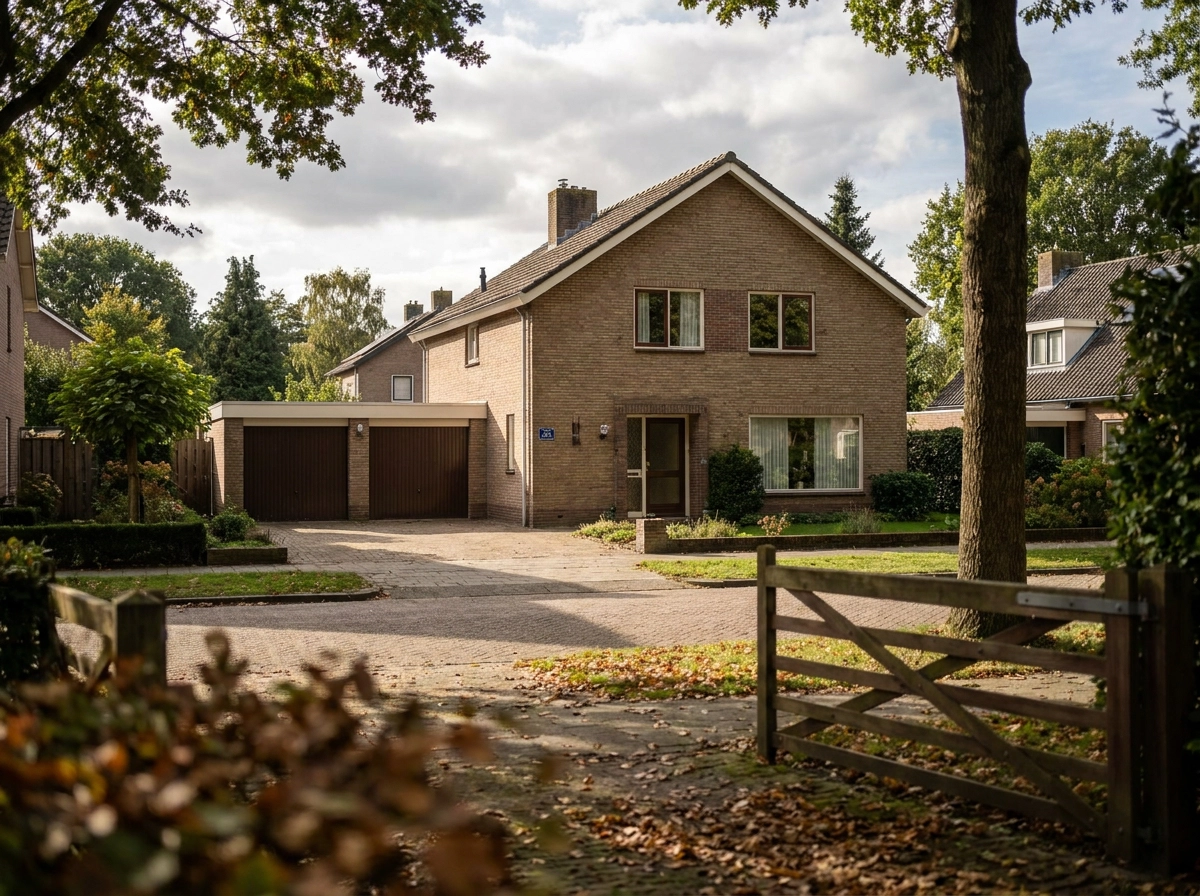
What Is a Jumbo Mortgage in Missouri and Kansas?
Quick Answer: In Missouri and Kansas, a mortgage becomes a jumbo loan when the loan amount exceeds $832,750 on a single-family home, the 2026 baseline conforming limit set by the FHFA. Neither state contains any high-cost counties, so this threshold applies uniformly statewide. Loans above this ceiling fall outside Fannie Mae and Freddie Mac guidelines and are underwritten by private wholesale investors using portfolio-based standards.
Neither Missouri nor Kansas qualifies for the elevated conforming limits the FHFA Conforming Loan Limit Values Map assigns to high-cost metros like Los Angeles or New York. Every county in both states sits at the national baseline, meaning a $833,000 loan in Ladue carries the same jumbo classification as one in Osage Beach or Overland Park.
The $832,750 ceiling applies specifically to 1-unit, single-family properties. Multi-unit properties carry higher thresholds before triggering jumbo underwriting:
| Property Type | 2026 Jumbo Threshold (MO & KS) |
|---|---|
| 1-Unit (Single-Family) | $832,750 |
| 2-Unit (Duplex) | $1,066,250 |
| 3-Unit (Triplex) | $1,289,400 |
| 4-Unit (Fourplex) | $1,602,650 |
Once a loan amount crosses these thresholds, Fannie Mae and Freddie Mac cannot purchase or guarantee it. That single fact reshapes the entire underwriting process. With no GSE backstop, the private wholesale investors who fund jumbo loans bear the full credit risk on the loan, which is why they evaluate the complete financial profile of the borrower rather than running the file through an automated approval engine designed for standardized conforming guidelines.
This portfolio-based underwriting model is consequential for borrowers. There is no universal jumbo rulebook the way there is for conventional lending. Individual wholesale investors set their own credit score floors, reserve requirements, debt-to-income caps, and documentation standards, and those standards vary meaningfully from one lender to the next.
That variability is precisely why accessing Missouri and Kansas jumbo loans through a wholesale broker creates a structural advantage over applying at a single retail bank. A broker with access to a wide lender panel can match your specific financial profile to the investor whose guidelines produce the most favorable qualification terms and lowest rate margin, rather than forcing your file into one institution’s fixed box.
2026 Jumbo Loan Qualification Standards in Missouri and Kansas
Understanding Jumbo Mortgages in Missouri and Kansas can help you make informed decisions when purchasing a home.
Because private wholesale investors set their own qualification parameters, jumbo standards vary significantly across lenders. The table below shows how retail bank requirements typically compare to wholesale access through DreamLux Home Loans.
| Qualification Metric | Standard Retail Bank | DreamLux Home Loans (Wholesale) |
|---|---|---|
| Jumbo Threshold (2026) | Loan over $832,750 | $832,750+ (1-unit) |
| Minimum Down Payment | 20%–25% | 10% available on strong credit, $0 PMI |
| Physician Jumbo Down Payment | 10%–15% | 0%–10% for qualifying medical professionals |
| Minimum Credit Score | 720–740 FICO | Priced from 700 FICO; expanded to 660 |
| DTI Limit | 38%–43% | Up to 45%–50% with strong reserves |
| Asset Reserves Required | 12–24 months PITIA | 6–12 months PITIA (varies by loan size) |
| Lender Processing Fees | $1,500–$2,500+ | $0 lender fees |
Credit Score Tiers Explained

Most wholesale jumbo programs use 700 FICO as the qualification floor. Best-tier interest rate pricing is reserved for borrowers at 740 to 760 and above, where investors assign the lowest margin. Borrowers with scores between 660 and 699 can still qualify through expanded programs, but lenders require a larger down payment and elevated reserve balances as compensating factors. Reviewing your full credit profile during the pre-approval stage identifies which tier applies to your file before you’re committed to any lender.
DTI Caps and Reserve Depth
Standard wholesale jumbo programs allow a debt-to-income ratio up to 45%. Select programs extend that ceiling to 50%, but only when the borrower holds at least 12 months of liquid PITIA reserves after closing.
Asset reserves are the liquid funds remaining in your bank, brokerage, or retirement accounts after covering the down payment and closing costs. Lenders measure reserves in months of PITIA. The standard range is 6 to 12 months for loan amounts under $1.5M. Loans above $1.5M and second-home purchases typically require 12 or more months. Retirement accounts generally count at 60% to 70% of their vested balance.
The $0 Lender Fee Advantage
Retail banks routinely charge $1,500 to $2,500 in origination and administrative fees on jumbo files. DreamLux Home Loans charges $0 in lender fees, saving jumbo borrowers approximately $1,600 on average at closing. For a detailed breakdown of program eligibility across all loan types, visit the Frequently Asked Questions page.
Jumbo Down Payment Tiers and PMI Implications
With credit score and reserve thresholds covered, the next variable shaping your jumbo strategy is how much you bring to closing and what that means for mortgage insurance.
| Down Payment | Borrower Profile | PMI Requirement |
|---|---|---|
| 0% to 10% | Qualifying Physician / Medical Professional | $0 PMI (income trajectory underwriting) |
| 10% | 740+ FICO, loan up to $1M–$1.5M | $0 PMI (rate-embedded LTV pricing) |
| 15% | Mid-range jumbo, standard credit profile | $0 PMI (higher rate margin may apply) |
| 20%+ | Broadest lender eligibility, all program types | $0 PMI, lowest rate tier |
How Jumbo Loans Handle PMI
Jumbo loans fall outside Fannie Mae and Freddie Mac guidelines, so GSE-mandated PMI does not apply. Wholesale investors instead price LTV risk directly into the interest rate margin at higher loan-to-value tiers, producing a slightly higher rate rather than a separate monthly insurance line. For many borrowers this structure is still more favorable than a conventional loan carrying explicit PMI above 80% LTV.
The Piggyback Structure (80/10/10)
For purchases just above the $832,750 conforming limit, a piggyback often outperforms a straight jumbo. The structure pairs a conforming first mortgage at $832,750 with a second mortgage or HELOC covering the remaining gap, avoiding jumbo rate premiums and lighter reserve requirements on the primary loan.
Consider a $975,000 purchase in Overland Park, Chesterfield, or Ladue. Ten percent down leaves $877,500 to finance. A single jumbo triggers full jumbo underwriting and reserves of 6 to 12 months PITIA. A piggyback splits that into an $832,750 conforming first and a $44,750 second, keeping the primary loan out of jumbo territory. The blended rate frequently beats the single jumbo rate.
The piggyback is less compelling above $1.1M, where the second mortgage grows large enough that blended cost begins to exceed a well-priced wholesale jumbo from a lender on the DreamLux 280+ panel.
Physician Jumbo: 0% to 10% Down Without PMI
Medical professionals at MU Health in Columbia, Kansas City metro hospital systems, and St. Louis academic medical centers qualify for underwriting built around income trajectory rather than current earnings. Attending physicians, fellows, and residents with signed employment contracts can access jumbo financing up to $2M+ with zero to 10% down and no PMI. The how does a jumbo second home differ from a conforming one at the Lake? guide covers key distinctions for medical professionals also purchasing at the Lake of the Ozarks.
Income Documentation for W-2, Self-Employed, and Non-Traditional Borrowers
Down payment structure determines how much capital you bring to closing; income documentation determines whether you qualify at all. Jumbo underwriting outside the GSE framework evaluates the full financial profile of the borrower, and in 2026 that evaluation follows three distinct pathways depending on how income is earned.
W-2 and Full-Doc Borrowers
Salaried employees with two years of W-2s and recent paystubs represent the most straightforward jumbo file. Underwriters verify base salary, confirm employment status, and calculate qualifying income directly from IRS transcripts. Variable components such as overtime or shift differentials typically require a two-year history before they count toward qualifying income.
Self-Employed Borrowers: Bank Statement Programs
Business owners in Jefferson City, Kansas City, and Chesterfield have historically faced a structural disadvantage: tax deductions that reduce taxable income also reduce qualifying income under traditional full-doc underwriting. Bank statement programs resolve this by using 12 or 24 months of personal or business deposits as the income source, bypassing the tax return entirely. Wholesale investors on the DreamLux panel now accept 12-month bank statement programs on jumbo loan amounts up to $3M, a meaningful expansion from prior standards that capped bank statement eligibility at lower amounts or required 24 months in all cases. To understand whether your business income structure fits this pathway, see which self-employed buyers qualify for a bank statement loan.
RSU, Bonus, and Variable Compensation
Corporate executives relocating to Lee’s Summit, Parkville, Overland Park, and Town and Country frequently carry base salaries well below their total compensation. Restricted stock units and annual bonuses are eligible for qualifying income when documented with a two-year receipt history and a reasonable expectation of continuance confirmed by an employer letter or vesting schedule.
DSCR for Real Estate Investors
Investors acquiring high-value rental or lakefront properties at the Lake of the Ozarks can qualify through a Debt Service Coverage Ratio analysis. The property’s verified rental income is compared against the proposed mortgage payment; personal income is not evaluated at all, making DSCR the most efficient path for investors with complex or non-reportable income structures.
Wholesale Lender Matching
Because jumbo guidelines vary significantly across private investors, a single bank can only apply its own standards to a non-traditional income file. DreamLux Home Loans shops self-employed, RSU, and DSCR files across 280+ wholesale lenders to identify the investor whose specific documentation requirements align with how the borrower actually earns income, rather than requiring the borrower to conform to one rigid template.
What to Expect During the Jumbo Mortgage Approval Process
Once income documentation is established, the approval process follows a structured sequence that differs meaningfully from a conventional loan workflow.
Step 1: Same-Day Soft-Pull Pre-Approval
The process opens with a soft-pull credit inquiry that evaluates your full financial profile without affecting your credit score. For borrowers managing multiple credit relationships, active business lines, or physician training accounts, this distinction matters. Zach Brown uses the soft pull to assess income type, liquid asset depth, and estimated FICO positioning so you enter the market with verified buying power, not a rough estimate.
Step 2: Wholesale Lender Panel Pricing
Before a formal application is submitted, Zach runs the loan scenario across the 280+ wholesale lender panel to identify the lowest rate margin, most favorable reserve threshold, and right program fit, whether standard jumbo, bank statement, physician, or piggyback structure. This step frequently surfaces rate or reserve differences invisible inside a single lender’s product menu. Get Your Jumbo Loan Quote Now!
Step 3: Full Application and Documentation Assembly
Once the optimal program is identified, the full application triggers a documentation checklist specific to jumbo underwriting:
- Income: Two years of federal tax returns (all schedules), W-2s or 1099s, and year-to-date paystubs; business financials for self-employed borrowers
- Assets: Two to three months of bank, brokerage, and retirement account statements
- Property-specific: Hazard and flood insurance estimates for waterfront Lake of the Ozarks properties, HOA certifications for luxury urban condominiums
Complete documentation submitted upfront is the single most effective compression tool for the timeline.
Step 4: Appraisal Strategy for High-Value Properties
Properties priced above $1.5M to $2M frequently require two independent appraisals because wholesale investors need dual value confirmation where luxury comparables are sparse. DreamLux pre-assembles local comparable sales before ordering appraisals in waterfront Camden County markets, rural Boone County estate corridors, and urban luxury markets in Ladue and Chesterfield, reducing the risk of value shortfalls or revision delays.
Step 5: Underwriting and Closing Timeline
Jumbo underwriting runs approximately 30 to 45 days, compared to 21 to 30 days for conventional loans. Jumbo loans lack access to automated GSE approval engines (Desktop Underwriter and Loan Product Advisor), so each file is reviewed manually against the specific wholesale investor’s portfolio guidelines. Proactive documentation assembly at Step 3 eliminates the most common delay sources: stale asset statements, missing tax schedules, or incomplete insurance binders that trigger condition loops and extend close dates.
Jumbo Mortgage Rates in Missouri and Kansas: What Drives Your Pricing
Once your file clears underwriting, the rate your lender quotes is not arbitrary. Understanding what drives jumbo pricing puts you in a stronger negotiating position before you lock.
The Conforming-Jumbo Rate Spread in 2026
Historically, jumbo loans carried a rate premium over conforming mortgages because private investors bore the full default risk without a GSE backstop. That spread has narrowed. In 2026, borrowers with 740+ FICO scores and 20% or more down can access wholesale jumbo pricing competitive with, and sometimes marginally below, retail conforming rates. That inversion occurs because wholesale investors compete aggressively for low-LTV, high-credit jumbo paper, which carries statistically lower default risk. Retail banks embed a margin layer into every quoted rate regardless of loan type. That layer disappears when you work through a broker with a large investor panel.
Six Factors That Determine Your Jumbo Rate
Wholesale investors price jumbo margins using six variables, applied in combination:
| Pricing Factor | Lower Rate Direction |
|---|---|
| Loan amount tier | Smaller loan amounts within jumbo range |
| LTV ratio | Lower LTV (more equity or down payment) |
| FICO score band | 740+ unlocks best tier pricing |
| DTI ratio | Below 43% improves margin |
| Reserve month depth | 12+ months strengthens rate offer |
| Loan purpose | Purchase prices better than cash-out refinance |
A borrower at 75% LTV, 760 FICO, 38% DTI, and 18 months of reserves qualifies for a meaningfully tighter margin than a borrower at 85% LTV with six months of reserves, even on an identical loan amount.
Regional Cost-to-Carry Differences Across Missouri and Kansas
Base rates may be identical across markets, but effective cost-to-carry varies because property tax escrows differ by county. Johnson County, KS applies an 11.5% assessment ratio versus Missouri’s 19%, which affects the qualifying PITIA payment and can shift a borderline DTI file from approvable to over-threshold. Lake of the Ozarks waterfront properties in Camden and Miller Counties carry additional escrow requirements for waterfront coverage and dock liability policies, further elevating the monthly payment used in DTI underwriting. Reviewing current 30-year fixed mortgage rates in Missouri alongside your county-specific escrow estimate gives you the most accurate payment picture before you shop.
15-Year vs. 30-Year Jumbo Fixed Rate
A 15-year term typically prices 50 to 75 basis points below a comparable 30-year jumbo, and amortization acceleration compounds that advantage over the loan life. The tradeoff is a higher monthly payment, which increases the qualifying DTI hurdle. This structure works best for physicians, corporate executives, and borrowers carrying 12 or more months of liquid reserves. Where DTI is the tighter constraint, the 30-year term preserves qualification flexibility while still benefiting from wholesale margin pricing.
The Wholesale Pricing Advantage
Every retail bank embeds a spread into their quoted rate to cover overhead, servicing costs, and profit margin. That spread is non-negotiable and invisible to the borrower. Zach Brown at DreamLux Home Loans prices your jumbo scenario across 280+ wholesale investors simultaneously, each competing at the investor margin level without the retail overlay, producing a lower rate than any single retail institution can offer on its own book.
Regional Jumbo Markets Across Missouri and Kansas
Where your property sits in Missouri or Kansas shapes which jumbo program fits best. Each region carries distinct underwriting considerations affecting down payment requirements, reserve calculations, and documentation strategy.
Mid-Missouri: Columbia, Ashland, and Jefferson City
Executive subdivisions and rural acreage estates in Boone and Cole Counties regularly push purchase prices past the $832,750 threshold. MU Health attending physicians, fellows, and residents are strong candidates for the Physician Jumbo program, which offers zero-to-low down payment options up to $2M+ with no PMI, based on income trajectory rather than current earnings alone. In Jefferson City, business owners and state government executives purchasing custom-built homes often benefit from flexible reserve structures accounting for business equity and deferred compensation alongside liquid cash.
Lake of the Ozarks: Waterfront and Second-Home Market
The Lake of the Ozarks ranks among the largest second-home jumbo markets in the Midwest. Primary and secondary waterfront residences in Lake Ozark, Osage Beach, Camdenton, and Sunrise Beach qualify for 10%-20% down options across Camden and Miller Counties. Waterfront insurance riders, dock permits, seasonal rental income, and multi-entity LLC ownership structures all require specialized investor guidelines most single-bank programs cannot accommodate.
Kansas City Metro: Cross-State Complexity
Buyers crossing State Line Road into Johnson County, KS face a meaningful escrow difference. Kansas assesses residential property at an 11.5% assessment ratio versus Missouri’s 19%, directly reducing monthly tax escrow on a comparable home and improving the qualifying payment calculation. Executive relocations to Overland Park, Olathe, Lenexa, Lee’s Summit, and Parkville frequently involve RSU vesting schedules and corporate bonus income, both requiring documentation strategies wholesale investors evaluate differently from base salary.
Saint Louis Metro: Luxury Corridors and New Construction
West County markets in Chesterfield, Ladue, Town and Country, and Creve Coeur demand fast underwriting turnarounds. Purchases over $1M benefit directly from the $0 lender fee structure, keeping closing costs lean on high-dollar transactions. In St. Charles County, upscale new-construction builds in O’Fallon, Wentzville, and Lake Saint Louis are driving jumbo volume as custom home prices climb. Ladue and Town and Country properties frequently exceed the $1.5M-$2M threshold triggering a two-appraisal requirement, making pre-assembled comparable sales strategy essential before ordering any appraisal.
Choose your local market to explore area-specific loan programs and reserve guidelines with Zach Brown directly.
Jumbo vs. Conventional: Which Loan Structure Fits Your Purchase?
Once you’ve mapped regional market dynamics across Missouri and Kansas, the next strategic question is structural: which loan type fits your purchase scenario?
| Purchase Price | Recommended Structure | Key Consideration |
|---|---|---|
| Under $832,750 | Conventional | GSE-backed, simpler underwriting, no jumbo reserve requirements |
| $833,000–$1.1M | Piggyback (80/10/10) vs. single jumbo | Blended rate, reserve depth, and monthly payment must be compared |
| $1.1M–$2M | Standard wholesale jumbo | Single loan, 6–12 months reserves, 700+ FICO floor |
| Above $2M | Luxury jumbo | Two-appraisal requirement, 12+ months reserves, manual underwriting |
| Investor/Rental | DSCR jumbo | Rental income qualifies the debt; personal income not required |
The $833K–$1.1M Gray Zone
A piggyback structure pairs a conforming first mortgage at $832,750 with a second mortgage or HELOC covering the gap. Keeping the first within GSE guidelines can produce a lower blended rate than a straight jumbo and reduce reserve requirements. Three numbers must be modeled side by side: blended interest rate, total reserve requirement, and monthly payment. Neither structure is universally superior; the answer depends on current wholesale pricing across specific lenders.
When Conventional Is the Cleaner Choice
If a larger down payment brings the loan amount below $832,750, conventional financing may be the smarter move. Avoiding jumbo underwriting eliminates reserve requirements, stricter credit scrutiny, and longer manual review timelines. The guide to conventional mortgage loans for Missouri homebuyers covers exactly when conventional financing outperforms more complex structures.
Non-Primary Residences and Investment Properties
Jumbo guidelines for second homes and investment properties carry 12+ months PITIA in reserves and lower LTV allowances than primary residence programs. For investment properties, the DSCR jumbo is frequently the more practical path: underwriting is based on the property’s rental income relative to its debt service, not personal tax returns or DTI. This applies directly to Lake of the Ozarks rentals and high-value Kansas City or St. Louis investment purchases.
Why the Comparison Must Be Run Across Multiple Lenders
No single retail bank can show you this comparison objectively; it only carries its own program. Zach Brown prices each scenario live across 280+ wholesale lenders simultaneously, identifying the lowest rate margin, most favorable reserve threshold, and best structural fit for the specific purchase price, credit profile, and property type before a formal application is submitted.
Frequently Asked Questions: Jumbo Mortgages in Missouri and Kansas
What Credit Score Do I Need for a Jumbo Mortgage in Missouri and Kansas?
Most wholesale jumbo programs set a minimum floor of 700 FICO. Borrowers in the 740 to 760+ range access the lowest rate tiers and the broadest program eligibility. Select expanded programs accommodate scores down to 660 FICO, provided the borrower pairs that score with a larger down payment and elevated liquid reserves. Because jumbo guidelines are set by private wholesale investors rather than GSEs, the credit score threshold varies by lender, which is why shopping across a wide panel matters.
Can I Get a Jumbo Loan with Only 10% Down in Missouri or Kansas?
Yes. Qualified borrowers with a 740+ FICO score can access 10% down jumbo financing on loan amounts up to $1M to $1.5M through select wholesale lenders on the DreamLux Home Loans panel, with $0 private mortgage insurance. Unlike conventional loans, jumbo investors do not require a separate PMI premium; however, higher loan-to-value tiers may be priced into the interest rate margin rather than a standalone monthly charge.
How Many Months of Reserves Are Required?
After covering your down payment and closing costs, most programs require 6 to 12 months of PITIA (Principal, Interest, Taxes, and Insurance) remaining in liquid accounts. Loan amounts above $1.5M, second homes, and investment properties typically require 12 or more months. Eligible reserve sources include bank accounts, brokerage accounts, and vested retirement funds.
Why Do Some Luxury Properties Require Two Appraisals?
Wholesale investors require dual independent appraisals on properties priced above $1.5M to $2M because luxury and waterfront comparables are sparse. A single appraisal carries too much valuation uncertainty when comparable sales are limited, as is common in markets like Ladue, Town and Country, or Osage Beach. The second appraisal provides a second independent benchmark, giving the investor sufficient confidence to underwrite the collateral.
Why Choose a Wholesale Broker Over a Retail Bank for a Jumbo Loan?
A wholesale broker shops your file across 280+ lenders to identify the lowest rate margin and the most favorable program fit for your specific credit, income, and reserve profile. DreamLux Home Loans charges $0 in lender fees, saving borrowers approximately $1,600 on average compared to retail origination and administrative charges. You also get direct, one-on-one access to a licensed senior loan officer rather than a call-center queue.
Can Self-Employed Borrowers Qualify for a Jumbo Loan in Missouri or Kansas?
Yes. In 2026, wholesale jumbo guidelines accommodate self-employed borrowers without requiring two years of W-2 income. Available documentation pathways include 12 to 24-month bank statement programs (personal or business deposits), P&L-only documentation, and asset depletion methods on loan amounts up to $3M. Business owners in Jefferson City, Kansas City, and Chesterfield frequently qualify using bank statement income rather than tax return net income, which often understates actual cash flow.
Start Your Jumbo Pre-Approval with Zach Brown at DreamLux Home Loans

Ready to move from research to action? Three structural advantages separate DreamLux Home Loans from retail lenders on every jumbo file.
Wholesale access to 280+ lenders means Zach Brown prices your loan scenario across competing investors simultaneously, securing the lowest available margin rate rather than the single rate a retail bank assigns internally. $0 lender fees eliminate the origination and administrative charges that typically add $1,500 to $2,500 at closing, saving jumbo borrowers approximately $1,600 on average compared to retail bank pricing. Same-day soft-pull pre-approvals establish your buying power without a hard credit inquiry, protecting your score while you evaluate luxury properties and negotiate purchase terms.
Zach Brown holds active licenses in both Missouri and Kansas, providing direct 1-on-1 service to buyers across every major luxury market in the region:
- Mid-Missouri: Columbia, Ashland, and Jefferson City
- Lake of the Ozarks: Lake Ozark, Osage Beach, and Camdenton
- Kansas City metro: Overland Park, Lee’s Summit, Parkville, KCMO, and KCKS
- St. Louis metro: Chesterfield, Ladue, Town and Country, Wildwood, and O’Fallon
Whether you are purchasing a waterfront estate in Camden County, an executive home in Johnson County, or a luxury new construction in St. Charles County, the underwriting strategy is built around your specific income structure, asset profile, and property type.
Start your jumbo pre-approval today at DreamLux Home Loans Jumbo Mortgages, or contact Zach Brown directly by call or text at (573) 301-4422.
Zach Brown NMLS #2156538 | DreamLux Home Loans, a DBA of NEXA Lending, LLC, NMLS #1660690 | Equal Housing Lender | Licensed in Missouri and Kansas
Conclusion
Qualifying for a jumbo mortgage in Missouri and Kansas requires understanding the loan limits, documentation standards, and rate factors that set these loans apart from conventional financing. The right lender relationship, down payment strategy, and income documentation approach can mean the difference between a smooth approval and costly delays. Regional market knowledge matters too, since luxury pricing trends in Kansas City, St. Louis, and the Lake of the Ozarks each carry their own underwriting nuances.
Working with a broker who shops multiple jumbo lenders, charges zero lender fees, and holds active licenses in both states puts you in the strongest possible position from day one. Your next luxury home is within reach. Contact Zach Brown at DreamLux Home Loans, start your same-day soft-pull pre-approval, and move forward with the confidence that your financing strategy is built specifically for you.