Mortgage Pre-Approval in Missouri and Kansas: How to Get Approved, What Lenders Verify and How Long It Lasts
A mortgage pre-approval is the difference between hoping a seller takes you seriously and being able to prove you can close. In Missouri and Kansas, where the same house often draws several offers in the first weekend, the buyer holding a verified pre-approval is the one the listing agent calls back first. This guide explains what pre-approval is, how it differs from pre-qualification, what you need to supply, how long it lasts, and how to compare offers from more than one lender without hurting your credit.
What a Mortgage Pre-Approval Actually Is
A pre-approval is a lender’s written decision, based on documents you have submitted, that you qualify for a specific loan amount under a specific program. It goes further than a pre-qualification, which is typically a quick estimate from stated income and a soft credit check.
A pre-approval generally involves:
A full credit pull and review of your credit report
Income verification through pay stubs, W-2s, tax returns or bank statements
Asset verification for down payment and closing costs
A check of your debt-to-income ratio against the specific loan program’s guidelines
That document is what you hand a real estate agent in Columbia, Kansas City, St. Louis or the Lake of the Ozarks when you make an offer.
Pre-Approval vs. Pre-Qualification: Why the Difference Matters
Pre-qualification answers “roughly what could I borrow?” Pre-approval answers “what will a lender commit to lend me, and on what terms?” Sellers and listing agents in Missouri and Kansas treat them very differently, and some sellers’ agents will not forward an offer to their client without a verified pre-approval letter attached.
Pre-qualification is useful for early planning. It is not a substitute for pre-approval once you are seriously touring homes.
How the Pre-Approval Process Works, Step by Step
Initial conversation. You talk through goals, timeline, credit picture and down payment. This is where the loan program gets chosen.
Document collection. Income, asset, identity and, where relevant, gift or business documentation.
Underwriting review. A pre-approval done properly is reviewed by underwriting, not just run through an automated engine.
Pre-approval letter issued. The letter states your maximum purchase price, loan amount, program and expiration.
If you want the complete document list laid out in one place, our mortgage pre-approval checklist walks through it item by item.
What You Need to Get Pre-Approved in Missouri or Kansas
Most borrowers should be ready to provide:
Government-issued ID and Social Security number
Last 30 days of pay stubs and two years of W-2s, or two years of tax returns if self-employed
Two months of bank and investment statements
Explanation of any large or unusual deposits
Rental income documentation if you own investment property
For VA loans, your Certificate of Eligibility; for FHA, nothing extra at this stage
Self-employed buyers, 1099 earners and business owners often qualify on more than tax returns alone. Bank statement and self-employed loan programs let deposits and profit-and-loss statements show real income that tax returns understate.
How Long Is a Mortgage Pre-Approval Good For?
Most pre-approval letters in Missouri and Kansas are good for 30 to 90 days. Sixty days is the most common window; some lenders and credit unions issue 90-day letters, and a few investors shorten it to 30 so they can re-pull credit before they price a lock. The expiration date is printed on the letter itself, and it matters at offer time: a listing agent reading a letter that lapsed last week treats it as no financing at all.
How Long Does a Mortgage Pre-Approval Last in Practice?
30 days — common where the investor wants a fresh credit pull before pricing a lock.
60 days — the typical window for conventional, FHA, VA and USDA files.
90 days — usually a broker or credit union extension, and the one to ask for if your search may run past two months.
When a pre-approval is close to expiring, most lenders will re-issue it without a new application, provided your income, assets and credit still check out. Expect to send updated pay stubs and bank statements, and expect a second credit pull. A rate lock is a separate commitment with its own expiration and its own cost — never treat the pre-approval date as your lock date.
How Long Pre-Approval Takes to Issue
Turnaround depends on how fast documents arrive and how complex the file is. A straightforward W-2 borrower with complete paperwork is typically reviewed within a day or two; a self-employed borrower with multiple entities, rental properties or a jumbo loan takes longer because more documentation has to be read carefully.
Pre-approval letters usually carry an expiration, commonly somewhere between 30 and 90 days, and most lenders will refresh one with updated pay stubs and statements. If your rate lock matters to you, ask about the difference between a pre-approval letter and a locked rate — they are not the same commitment.
What Pre-Approval Does and Does Not Lock In
A pre-approval is a statement of creditworthiness, not a rate lock and not a guarantee. It can change if your financial picture changes before closing: a new car loan, a financed furniture purchase or a job change can alter the file. Once you are under contract, the loan still has to go through final underwriting on the specific property, including appraisal. Treat the pre-approval amount as a ceiling, not a target — buying below it usually means a more comfortable payment.
How to Compare Pre-Approval Offers From Multiple Lenders
This is where most buyers leave money on the table. Two lenders can approve you for the same loan amount at meaningfully different pricing, fees and program overlays. Compare, at minimum:
Interest rate and any points quoted
All lender fees, itemized on a Loan Estimate
Whether the pre-approval was underwritten or automated
Program fit: FHA, VA, USDA, conventional, jumbo or a specialty program
A broker works in the opposite direction from a single retail bank: instead of one rate sheet, one file is shopped across many wholesale lenders. DreamLux Home Loans works with access to 280+ lenders, which is the practical reason shopping a file matters. If you want the mechanics of that comparison, read mortgage broker vs. bank and our guide to conventional purchase financing in Missouri and Kansas.
Pre-Approval for Different Borrower Types
Program choice is decided at pre-approval, and the right program changes everything:
FHA — lower credit and down payment thresholds, with mortgage insurance. See FHA mortgage loans.
VA — no down payment for eligible service members, veterans and surviving spouses, including buyers near Fort Leonard Wood, Whiteman Air Force Base and the Truman VA community in Columbia.
USDA — rural Missouri and Kansas properties, including many towns outside the metro corridors. See USDA loans.
Physician loans — student debt treated differently and no PMI, for residents, fellows and attending physicians. See physician mortgage loans.
Jumbo — above the conforming limit, common around the Lake of the Ozarks and higher-priced Kansas City suburbs.
DSCR and investment property — qualification on rental income rather than your personal return.
Down payment assistance is also worth checking before you finalise a pre-approval, because it can change how much cash you need. Our down payment assistance page covers Missouri programs.
Frequently Asked Questions
How long is a mortgage pre-approval good for? Typically 30 to 90 days, with 60 days the most common in Missouri and Kansas. The expiration date is on the letter, and a lender can usually refresh it with updated documents before it lapses.
How long does a mortgage pre-approval last if I have not found a house yet? It still expires on the date printed on the letter. If your search is likely to run longer than two months, ask for a 90-day letter, and plan on a short refresh — new pay stubs, new statements and a second credit pull.
Does pre-approval hurt my credit score? A mortgage credit inquiry has a small effect, and multiple mortgage inquiries within a short window are generally treated as a single shopping event.
Can I get pre-approved before I have found a house? Yes, and you should. Pre-approval before touring keeps you from falling for a home you cannot finance.
Is pre-approval the same as approval? No. Final approval happens after underwriting reviews the specific property, the appraisal and the completed file.
Do I need pre-approval to make an offer in Missouri or Kansas? You do not strictly need it, but many sellers’ agents will not present an offer without it, and sellers routinely choose the offer with the strongest financing.
Ready to Get Pre-Approved?
DreamLux Home Loans is a licensed mortgage brokerage serving Missouri and Kansas, led by Senior Mortgage Loan Officer Zach Brown (NMLS #2156538). Whether you are buying in Columbia, Ashland, Jefferson City, Kansas City, St. Louis or at the Lake of the Ozarks, the first step is a pre-approval you can actually use — one that has been reviewed, priced across multiple lenders and matched to the right program for your situation. Start with the pre-approval checklist, then let us put your file in front of the lenders that fit it.
Columbia, MO Mortgage Broker: Compare Home Loan Programs, Rates & Costs
By Zach Brown | Senior Mortgage Loan Officer | NMLS #2156538DreamLux Home Loans|DBA NEXA Lending, LLC | NMLS #1660690Published November 17, 2026
Buying a home in Columbia, Missouri?
Whether you’re a first-time homebuyer, relocating to Mid-Missouri, purchasing a higher-value property, building a custom home, or refinancing, your mortgage options shouldn’t be limited to a single lender.
AtDreamLux Home Loans, we help qualified homebuyers, homeowners, and real estate investors explore financing through a network of 280+ wholesale lenders.
Our goal is to help you compare mortgage rates, closing costs, monthly payments, program requirements, and long-term financing considerations so you can make an informed decision.
Serving Columbia, Ashland, Jefferson City, Fulton, Boonville, and surrounding Mid-Missouri communities, with mortgage services available in Missouri and Kansas.
A mortgage broker helps borrowers compare available mortgage financing from multiple lenders rather than relying exclusively on one bank’s loan products.
For example, one lender might offer competitive conventional financing, while another may have different eligibility requirements or pricing for physician, construction, jumbo, or self-employed borrowers.
A comprehensive mortgage comparison considers:
Interest rate and annual percentage rate (APR)
Estimated monthly principal and interest
Property taxes and homeowners insurance
Mortgage insurance, when applicable
Lender fees, discount points, and closing costs
Down payment and estimated cash needed at closing
Loan eligibility and longer-term financing goals
The Consumer Financial Protection Bureau recommends comparing Loan Estimates when evaluating mortgage offers.
Conventional mortgages are popular among first-time homebuyers, repeat buyers, and homeowners seeking to refinance.
Some eligible conventional programs allow down payments as low as 3%, depending on borrower qualifications and program requirements.
Conventional financing may be appropriate for borrowers with qualifying credit, income, assets, and debt-to-income ratios.
Private mortgage insurance may apply when the down payment is below 20%, and certain cancellation rules can differ from FHA mortgage insurance requirements.
For Columbia-area buyers, comparing conventional financing with FHA or other eligible programs can help clarify the complete cost of financing.
FHA-insured mortgages can provide an alternative financing path for eligible buyers, including some borrowers who may not meet certain conventional underwriting requirements.
Qualified borrowers may be eligible for a down payment as low as 3.5%.
FHA loans generally include upfront and annual mortgage insurance premiums, so buyers should compare total monthly payments and estimated closing costs rather than evaluating the interest rate alone.
Columbia has a significant healthcare community, including medical professionals working with University of MissouriHealth Care and other regional employers.
Some mortgage lenders offer specialized financing for qualifying physicians, residents, fellows, and certain other medical professionals.
Depending on the program, physician mortgage financing may provide alternative treatment of student loans, employment contracts, mortgage insurance, or down-payment requirements.
These features vary by lender and are not guaranteed.
A comparison against conventional and jumbo financing can help determine which available structure better fits the borrower’s circumstances.
Jumbo Mortgage Loans for Higher-Value Columbia Homes
Jumbo mortgages are generally used when financing exceeds applicable conforming loan limits.
Because jumbo loans are not subject to the same standardized purchase requirements as conforming loans, eligibility and pricing may vary significantly between lenders.
Buyers purchasing higher-value properties in Columbia and surrounding Mid-Missouri communities may benefit from comparing multiple jumbo loan programs.
Important considerations include credit requirements, down payment, reserves, debt-to-income limits, and property eligibility.
Construction Loans in Columbia and Mid-Missouri
Building a home introduces financing considerations beyond a traditional purchase mortgage.
Construction financing may involve:
One-time-close construction-to-permanent loans
Two-close construction financing
Construction draws and inspections
Builder approval requirements
Lot equity and down-payment calculations
Interest-only payments during construction, when applicable
The right structure depends on the project, builder, land ownership, borrower qualifications, and lender guidelines.
DSCR Investor Loans and Self-Employed Mortgage Options
Some real estate investors may qualify for Debt Service Coverage Ratio (DSCR) financing based on eligible property cash flow rather than traditional personal-income underwriting.
DSCR programs can vary in their treatment of rental income, property type, reserves, short-term rentals, and required coverage ratios.
For qualifying self-employed borrowers, bank statement or alternative-documentation mortgage programs may also be available.
These programs generally have different eligibility requirements, pricing, and documentation standards than conventional financing.
Why Compare Mortgage Rates, APR and Closing Costs?
The lowest advertised interest rate does not necessarily represent the lowest overall mortgage cost.
For example, one lender may offer a lower rate in exchange for additional discount points, while another may offer a slightly higher rate with lower upfront charges.
A useful mortgage comparison considers:
Estimated monthly payment
APR and financed costs
Cash required at closing
Mortgage insurance
Expected time in the home or mortgage
Potential refinancing considerations
Refinancing is never guaranteed and depends on future market conditions, property value, credit, income, and program eligibility.
DreamLux Home Loans focuses on helping borrowers understand their available mortgage choices rather than assuming one loan program fits everyone.
Our approach emphasizes:
Access to a broad wholesale lending network
Comparison of eligible mortgage programs
Clear explanations of rates, costs, and payments
Guidance for conventional and specialty financing
Local familiarity with Columbia and Mid-Missouri
Personalized communication throughout the mortgage process
We believe borrowers deserve to understand the numbers behind one of their largest financial decisions.
Frequently Asked Questions About Columbia, Missouri Mortgages:
Who is the best mortgage lender in Columbia, MO?
The best mortgage lender depends on your credit, income, loan amount, property, available programs, and financing goals. Comparing multiple eligible loan offers can help identify competitive options for your circumstances.
Do I need 20% down to buy a home in Columbia?
No. Some qualifying conventional programs allow as little as 3% down, FHA may allow 3.5%, and eligible VA or USDA borrowers may qualify for no-down-payment financing.
Can first-time homebuyers qualify for mortgage assistance in Missouri?
Potentially. Eligible buyers may qualify for certain Missouri Housing Development Commission programs or other available assistance, subject to income, purchase-price, funding, and program requirements.
Some properties in surrounding areas may qualify, but eligibility must be verified using the exact address and applicable household-income requirements.
Are physician mortgages available in Columbia?
Potentially. Specialized mortgage programs may be available to qualifying physicians, residents, fellows, and certain other medical professionals. Requirements vary by lender.
Can self-employed borrowers qualify for a mortgage?
Yes, subject to qualifications. Depending on the borrower’s financial circumstances, conventional documentation or alternative bank statement programs may be available.
Can I finance a new construction home in Mid-Missouri?
Potentially. Construction financing is available through certain lenders, subject to project approval, builder requirements, property eligibility, and borrower qualifications.
Can investors qualify using rental-property income?
Some DSCR mortgage programs evaluate eligible rental-property cash flow. Qualification depends on the property’s financial performance and the lender’s specific underwriting requirements.
Is a mortgage broker different from a bank?
Yes. A bank generally offers its own mortgage products, while a mortgage broker can help borrowers compare financing available from multiple participating lenders.
Should I get preapproved before making an offer?
Preapproval can help clarify your estimated purchasing budget and financing options before you submit an offer. It is not a final loan approval or guarantee of financing.
Zach Brown is a mortgage loan officer with DreamLux Home Loans, DBA NEXA Lending, LLC (NMLS #1660690) statewide across Missouri & Kansas.
Based in Mid-Missouri, Zach assists homebuyers, homeowners, and real estate investors with mortgage financing, including Conventional, FHA, VA, USDA, Physician, Jumbo, Construction, DSCR, and alternative-documentation loan programs.
His approach focuses on personalized mortgage comparisons, borrower education, and helping clients understand the financing options available for their individual goals.
Scott Wilson, Senior Mortgage Loan Officer| NMLS #2181239:
Scott Wilson is part of the DreamLux Home Loans mortgage team, helping borrowers across Missouri Statewide explore mortgage financing options and understand the home loan process.
Individual state licensing and authorizations should be verified through NMLS Consumer Access.
Whether you’re buying your first home, building, refinancing, relocating, or investing in Columbia and surrounding Mid-Missouri communities, DreamLux Home Loans can help you explore your available financing options.
DreamLux Home Loans Welcomes: Scott Wilson, Senior Mortgage Loan Officer, on Veterans Day 🇺🇸
November 11, 2026 | Columbia, Missouri
DreamLux Home Loans welcomes Scott Wilson (NMLS #2181239) alongside Zach Brown (NMLS #2156538), while honoring veterans and their service on November 11, 2026
DreamLux Home Loans is pleased to announcethatScott Wilson, Senior Mortgage Loan Officer (NMLS #2181239), has joined our Missouri mortgage lending team:
Scott brings valuable mortgage lending knowledge, strong attention to detail, and a commitment to helping homebuyers and homeowners understand their financing options.
The announcement comes on Veterans Day, making this an especially meaningful occasion to recognize Scott’s military service and thank the men and women who have served our nation 🇺🇸 🎖️
Expanding Our Missouri Mortgage Team:
DreamLux Home Loans is a mortgage brokerage operating under NEXA Lending, LLC (NMLS #1660690)
Our team helps borrowers explore home purchase, refinance, and investment property financing through access to 280+ wholesale lenders.
With Scott joining the team, Missouri borrowers have another experienced mortgage professional available to discuss their goals, understand their options, and receive personalized guidance through the lending process.
“I’m genuinely excited to welcome Scott to the DreamLux Home Loans Team. He’s going to be a major asset to not only our team, but also bring his attention to detail, professionalism, and dedication to all the wonderful people we help serve here in Missouri, Kansas & beyond where we expand out to. Scott has the exact qualities that I value in building our mortgage team to fully go the extra mile in helping people” — Zach Brown
Zach serves borrowers throughout both Missouri and Kansas, including Columbia, Jefferson City, Kansas City, St. Louis, the Lake of the Ozarks, and surrounding communities.
Honoring All Veteran Heroes Today 🇺🇸
At DreamLux Home Loans, we’re grateful to recognize Scott’s military service on Veterans Day.
We also extend our sincere appreciation to every veteran hero, active-duty service member, and military family for their time, service, sacrifice, bravery, and commitment.
Thank you for all your service and everything you’ve given to us in our country.
Connect with DreamLux Home Loans Today!
Are you preparing to purchase a home, refinance an existing mortgage, or explore available loan programs?
Click Here to Visit DreamLux Home Loans Website to connect with Zach & Scott, review available mortgage services, or begin the application process. We look forward to helping you take your next steps with greater clarity & confidence.
Ready to Explore Your Mortgage Options?
Connect directly here (in our link below) with our DreamLux Home Loans team to compare the best tailored financing options for your next home purchase, investment property or refinance.
Columbia, MO Mortgage Lending Options | Brokers vs. Banks
If you are comparing mortgage lenders Columbia MO, the rate you see online is only one line in a much longer file. The real difference between a broker, bank, credit union and online lender often appears in underwriting flexibility, fees, turn times and how each handles your income profile. For borrowers who know the basics, that distinction matters whether you are buying a home near Columbia, refinancing in Central Missouri, or investing in rental property across Missouri and Kansas where licensing allows.
This guide gives you a clear comparison. You will start with the short answer on mortgage lenders Columbia MO, then review broker vs. bank vs. credit union vs. online lender options. You will learn why Columbia borrowers shop the broker channel, which purchase loan programs are most common, and how self-employed borrowers, investors and physicians qualify differently. We also cover refinance choices, what changes by location in Central Missouri, how to compare Loan Estimates line by line, what to verify before choosing a lender, FAQs and your next steps.
The Short Answer on Columbia Mortgage Lenders
When comparing mortgage lenders in Columbia, MO, borrowers really choose between four lender types: a mortgage broker, a community bank or credit union, a national retail bank, and an online or direct lender. That choice decides how many rate quotes you can see before you commit. A broker shops your file across a wholesale network; a bank or credit union generally prices only its own in-house programs. DreamLux Home Loans operates as a brokerage under NEXA Lending with access to a broad wholesale network, so one application can be compared against many pricing sheets instead of one. That structure is why Columbia buyers choose DreamLux Home Loans.
Program fit usually outweighs the advertised rate. Conventional, FHA, VA, USDA, jumbo, DSCR and bank statement loans each carry different credit, income and property rules. The cheapest option for a salaried buyer in Ashland may be the wrong lender for a self-employed buyer in Columbia.
Verify licensing before you share tax returns or bank statements. DreamLux Home Loan sis licensed in Missouri and Kansas only, led by Zach Brown, NMLS #2156538. Every lender you talk with should be verifiable on NMLS Consumer Access.
Use the rest of this page as a comparison framework: lender type first, then program fit, then Loan Estimate math, then pre-approval. The CFPB Loan Estimate explainer shows what each page is designed to reveal.
Broker vs. Bank vs. Credit Union vs. Online Lender in Columbia
These four lender types differ less in advertised rates than in how many lenders your file actually reaches.
Mortgage broker. One application reaches a wholesale network, so multiple pricing sheets appear side by side and broker compensation is separately itemised in your loan documents under federal originator rules. Best for non-textbook files: self-employment income, jumbo purchases, rental property.
Community bank or credit union. Local decision-making and relationship banking, usually limited to that institution’s own portfolio. Portfolio lending solves unusual cases, but your rate shopping stops at one lender.
National retail bank. Broad branch and app experience with standardized programs. Pricing follows a single set of investor guidelines and overlays, so credit or income outliers get declined rather than shopped.
Online or direct lender. Fast digital process and heavy marketing spend. Rates can be strong for simple, high-credit scenarios and less competitive once your file involves complexity, an unusual property type, or non-W-2 income.
Lender type
Lenders accessed
Rate shop
Program breadth
Underwriting flexibility
Speed to close
Suits best
Broker
Many wholesale investors
Yes, side by side
FHA, VA, USDA, jumbo, DSCR
High; file can be re-shopped
Varies by investor
Self-employed, jumbo, investors
Community bank or credit union
One
No
Narrow, portfolio-based
Case-by-case
Moderate
Members with unusual cases
National retail bank
One
No
Standardized
Low; overlays decline outliers
Predictable
Simple W-2 files
Online or direct lender
One
No
Simple products
Low on complex files
Fastest on clean files
High-credit, straightforward purchases
Treat these ratings as directional; breadth and speed vary by institution and loan type.
Boone County lender-level activity is accessible through the CFPB HMDA Data Browser, which shows actual lender activity in Columbia by year. Lenders exempt from HMDA reporting may be missing, so read those counts as a floor rather than a census.
Before picking a lender type, select your goal below so every quote you collect prices the same program. The next section covers why Columbia borrowers shop the broker channel.
Why Columbia Borrowers Shop the Broker Channel
Beyond the structural comparison above, here is how the broker channel produces different outcomes for Columbia-specific borrower profiles.
Wholesale pricing is the core difference. Brokers work from investor pricing sheets that are never posted publicly. The same borrower profile can be priced differently across investors because each one applies its own risk appetite, credit overlays and property rules. For a fuller breakdown of what that structure costs you, see Mortgage Broker vs. Bank: Which One Gets You a Better Deal?.
Program breadth matters just as much. Columbia mixes first-time buyers, university and healthcare employees, veterans and rural property owners. Those files land in different programs: FHA, VA, USDA, jumbo and bank statement. A broker routes each file to the lenders that actually do that loan type in volume, rather than forcing every borrower into one set of guidelines.
Jumbo and DSCR investors underwrite very differently from one another on reserves, rent coverage and property type. That is where shopping the file produces the widest gap in approval terms, not just in rate.
Broker compensation is separately itemised in your loan documents under federal originator rules (see 12 CFR § 1026.36). You can see what the broker is paid instead of assuming it is baked in.
Do not take a lender count on faith. Ask three questions: how many investors is the brokerage approved with for your specific program type, how many of those actively lend in Columbia, and who funds the loan at closing.
Answer those, and the next decision is program fit.
Purchase Loan Programs Columbia Buyers Compare Most
Program breadth only pays off when the program matches your income story. Six options drive most Columbia purchase comparisons.
Conventional. The strongest fit for documented W-2 or salaried income, established credit and a down payment large enough to avoid mortgage insurance. It is also the usual path to the lowest advertised rates for well-qualified borrowers.
FHA. Backed by HUD, FHA is commonly associated with more flexible qualification standards; confirm current credit, down payment and gift-fund rules on HUD’s FHA program pages. That combination keeps it among the most common choices for first-time buyers in Columbia and Ashland. FHA limits vary by county, so confirm the current figure for your county on FHA Mortgage Limits.
VA. For eligible service members, veterans and surviving spouses. Most eligible borrowers can purchase with no down payment. This matters heavily around Fort Leonard Wood and Whiteman Air Force Base, and for the Truman VA community in Columbia. Veterans with full entitlement face no loan limit when the appraisal supports the price; VA loan limits explain how entitlement works.
USDA. Built for eligible rural and small-town properties outside the Columbia city limits, including parts of Boone, Callaway and Cooper counties. Eligibility is drawn by area, not by county line, so check the USDA map for the specific address before you assume a property qualifies.
Jumbo. Required once the loan amount exceeds the conforming loan limit for the property’s county, which is the deciding factor on higher-priced homes in Columbia, the Lake of the Ozarks and the Kansas City metro. FHFA publishes conforming loan limit values annually. Wholesale jumbo investors price and underwrite very differently from one another, which is where comparison shopping matters most.
New construction. Construction-to-permanent loans and builder-preferred lender structures differ in draw schedules, inspection timing and closing costs. Always price a builder incentive against an outside lender quote to see the real total cost.
Your equity position from day one also determines what you can access later, so compare equity and refinance options while the purchase is still ahead of you.
Programs for Self-Employed Borrowers, Investors and Physicians
Beyond the purchase programs above, three borrower profiles need different qualification rules entirely: self-employed owners, rental investors and physicians.
Bank Statement and Self-Employed Loans
Business owners and 1099 earners whose write-offs shrink their taxable income often fail a conventional review even when cash flow is strong. Bank statement programs qualify borrowers on business deposits over a defined statement period, with exact requirements varying by investor, as well as on a profit and loss statement or asset depletion, so deposits and reserves carry the file instead of tax returns.
DSCR Loans for Rental Property
DSCR programs evaluate the property’s rental income relative to the mortgage payment rather than personal income, approval criteria vary by investor. That approach can carry a single rental or an entire portfolio across Missouri and Kansas, including owners who already hold several conventional mortgages.
Physician Loans
Physicians, dentists and residents often show large student loan balances next to income that has not caught up yet. Physician mortgage programs are designed to accommodate the income and debt profile common among medical professionals, terms vary by investor; request a program comparison for your situation.
Second Homes and Lake of the Ozarks Property
Waterfront, seasonal and short-term rental homes around the Lake of the Ozarks finance as second homes or as investor and DSCR loans where the lender permits rental use. Appraisal approach and flood zone review change the comparison more than the rate does.
Asset-Based and Alternative Jumbo
Borrowers with substantial reserves but irregular or complex income can qualify on assets rather than earnings. Wholesale investors set reserve requirements differently, so a file that does not fit one investor’s guidelines may fit another’s. Shopping those guidelines is where the outcome is decided.
That same comparison discipline carries into refinancing, where the loan type you already hold narrows the options.
Refinance Options Compared for Columbia Homeowners
For Columbia homeowners who already hold a mortgage, the same comparison logic applies in reverse: the goal is a better loan, not just a loan. Five refinance paths dominate local decisions, and each solves a different problem.
Rate-and-Term vs. Cash-Out
Rate-and-term refinance lowers your interest rate, your term, or both without taking cash out. It is a direct comparison against your current payment and remaining balance, so it fits when your credit or equity has improved since you closed. Cash-out refinance replaces the first mortgage with a larger loan and pays you the difference in cash. Columbia homeowners commonly use it for debt consolidation, renovations or major expenses. The tradeoff is a larger balance and a restarted term.
Streamline Options for FHA and VA Loans
FHA Streamline is a reduced-documentation refinance for an existing FHA loan. It often skips the appraisal, but the lender still has to document a net tangible benefit, so your rate or payment must improve. Cash back above $500 is not permitted. Missouri FHA borrowers weighing it against a full refinance can see the numbers in this FHA Streamline refinance vs. rate-and-term refi comparison. VA IRRRL, the Interest Rate Reduction Refinance Loan, works only on existing VA loans. It is designed to lower the rate and payment, and may involve reduced documentation requirements, confirm current VA IRRRL appraisal and credit requirements with your lender or at VA.gov. That streamlined process matters for veteran homeowners around Fort Leonard Wood and Whiteman Air Force Base.
HELOC or Cash-Out?
A HELOC leaves your first mortgage in place and adds a second lien. Compare total cost, draw period, repayment terms and whether a variable rate fits your budget before choosing it over cash-out. A HELOC preserves a low first-mortgage rate; cash-out replaces it.
Run the Break-Even Math First
Divide the total cost of the new loan by the monthly savings to see how many months it takes to come out ahead. Sell or refinance again before that point and the refinance costs you money.
What Changes by Location in Central Missouri
Location determines which lenders can actually close your loan, and program fit and investor appetite shift block by block across central Missouri.
Columbia mixes first-time buyers, university and healthcare employees, and relocating professionals. Price band usually decides the conventional versus jumbo question, and above the conforming limit, jumbo investors price and underwrite the same file very differently. That gap is why comparing Missouri mortgage rates today matters most in the jumbo band.
Ashland and Jefferson City are commuter-friendly towns where USDA eligibility often reaches outer edges, so verify the specific address on the USDA eligibility map before assuming any particular path.
Lake of the Ozarks tilts the comparison toward second homes, waterfront property, and rental or investor financing. Appraisal approach, flood zone review, and each lender’s appetite for short-term rental use all change which investors will consider the file at all.
Kansas City and St. Louis metros see more jumbo and physician loan activity, more condo and new construction inventory, and sharper differences between wholesale and retail pricing. DreamLux is licensed in Missouri and Kansas only, so every market above sits inside that footprint.
Veteran and military buyers drive steady VA purchase and IRRRL refinance demand near Fort Leonard Wood, Whiteman Air Force Base, and the Truman VA community in Columbia. VA documentation differs from a conventional file, so lenders that rarely close VA loans slow the process down.
Check the public record. The CFPB HMDA Data Browser lets you filter, aggregate, and download mortgage activity for Boone County rather than relying on marketing claims, showing which lender types are genuinely active before you shortlist anyone.
Once you know which mortgage lenders in Columbia, MO actually close loans in your area, the Loan Estimate is where the real comparison begins.
How to Compare Loan Estimates Line by Line
Location narrows which lenders can serve you. The Loan Estimate narrows which offer actually costs less. Every lender must use the same standardized form, and that standardization is the whole point: identical formatting across lenders lets you read offers line by line instead of page by page of marketing.
Page 1: rate, lock, and terms. Compare the interest rate, whether it is locked and for how long, and the loan terms. An unlocked quote is not the same offer as a locked rate, especially when your closing date is weeks away. A rate you cannot lock until 15 days before closing carries risk the locked offer does not.
Page 2: the costs behind the rate. Compare origination charges, discount points, services you cannot shop for and services you can shop for. Total lender costs, not the headline rate, determine what you actually pay at closing. Two lenders advertising the same rate can differ by thousands in points and fees.
Cash to close and five-year cost. Compare estimated cash to close and the total cost projection shown for the first five years. That projection captures closing costs you would not recover if you refinance or sell earlier than planned, which matters when your timeline in Columbia is shorter than the break-even point.
Credits versus points. Compare lender credits against discount points and how each changes your effective cost. Generally speaking, a lender credit lowers upfront closing costs in exchange for a higher interest rate, confirm the tradeoff on your specific Loan Estimate. Paying points does the opposite, trading upfront cost for a lower rate.
Make the offers comparable. Ask every lender to price the same loan amount, term, loan type and lock period. If the offers differ on any of those variables, you are comparing guesses, not loans. A second-opinion Loan Estimate comparison places your estimate beside multiple pricing sheets at once, so the gap shows up in dollars rather than in adjectives.
What to Verify Before You Pick a Columbia Mortgage Lender
Once you have two or three Loan Estimates side by side, the last step is verifying the lender behind them. A sharp estimate means little if the company cannot legally close your loan in Missouri.
Licensing Is Public Record
Look up every lender and loan officer on NMLS Consumer Access, the nationwide registry maintained by state regulators. DreamLux Home Loans operates under NEXA Lending and is led by Senior Mortgage Loan Officer and CEO Zach Brown, NMLS #2156538. Confirm that both the company and the individual officer hold active Missouri or Kansas licenses. DreamLux serves those two states only. A lender quoting you from outside that footprint may not be able to close in your market, no matter how good the rate looks.
Who Underwrites and Funds the Loan
Ask directly. A broker originates and packages your file; an investor funds it. The funding source tells you whose guidelines actually govern your approval, so you know whether you are dealing with one set of overlays or a wholesale network.
Disclosures and Plan B
Review the Loan Estimate and Closing Disclosure for broker compensation and disclosure timing, as described above. Federal mortgage disclosure rules under 12 CFR § 1026.19 require accurate and timely delivery of the Loan Estimate and Closing Disclosure. Disclosures that arrive late or change at the closing table are a warning sign.
Then ask what happens if your first approval falls apart. A lender with one set of guidelines sends you back to the start. Ask what happens if an approval falls through, a brokerage with multiple wholesale relationships may have more routing options than a single-investor lender. That fallback is often the difference between closing on time and losing the house.
Frequently Asked Questions About Columbia Mortgage Lenders
Licensing checks settle who can close your loan. Program fit decides what you actually pay. These are the questions Columbia borrowers ask most before they commit.
Which mortgage lender in Columbia, MO is best for first-time buyers?
There is no single best lender, only the best program fit. FHA is commonly associated with more flexible qualification standards for down payment and credit. Conventional wins on cost once your credit and down payment are strong. Price both before you commit.
Do I save money using a mortgage broker instead of my bank?
It depends on how complex your file is. A broker compares multiple wholesale pricing sheets while a bank offers one. The gap grows with self-employment income, jumbo loan amounts or investment property. For a simple W-2 file with strong credit, the difference can be modest.
Can self-employed borrowers in Columbia qualify without W-2 income?
Yes. Bank statement, profit-and-loss and asset-based programs exist specifically for business owners and 1099 earners whose tax returns understate real income. These programs qualify on business deposits over a defined statement period, with exact requirements varying by investor, and reserves and credit score driving the final terms.
Are VA loans available in Columbia and near Fort Leonard Wood?
Yes. VA purchase financing and VA IRRRL refinance are available to eligible service members, veterans and surviving spouses, including VA jumbo above the conforming loan limit. That covers borrowers around Fort Leonard Wood, Whiteman Air Force Base and the Truman VA community in Columbia.
Is DreamLux Home Loans licensed in Missouri?
Yes, in Missouri and Kansas only. Zach Brown holds NMLS #2156538 and the brokerage operates under NEXA Lending. Borrowers outside those two states cannot be served, so confirm your property sits inside the licensed footprint.
When do I need a jumbo loan instead of a conventional one?
When the loan amount exceeds the conforming loan limit for the property’s county. Jumbo investors set their own reserve, credit and appraisal rules, so offers differ more than they do on conventional loans. That variance is exactly where comparing multiple investors pays off.
Your Next Steps in the Columbia Mortgage Search
The FAQ answered program fit. Now turn answers into action.
Match the program to your income story first. W-2 borrowers should price conventional and FHA. Veterans should price VA. Self-employed borrowers should price bank statement options. Investors should price DSCR. Program fit decides which lender can approve you before rate shopping begins.
Then collect quotes on identical terms: same loan amount, term and lock period. Different terms make rates incomparable. Read both pages of every Loan Estimate as described above, and compare estimated cash to close and the five-year cost projection.
Verify licensing on NMLS Consumer Access and confirm the lender can close in Missouri or Kansas before you submit documents, as covered above.
Then get pre-approved with a written letter from a lender that can see more than one pricing sheet. A single-lender pre-approval reflects one set of guidelines. A brokerage can compare several before you commit. DreamLux Home Loans serves Columbia, Ashland, Jefferson City, the Lake of the Ozarks, Kansas City and St. Louis. Pre-approval is the fastest way to see real numbers instead of estimates. Start there, then compare offers line by line.
Conclusion
Choosing a Columbia, MO mortgage lender is less about picking a big name and more about finding the right program and transparent pricing. A broker can shop more pricing sheets and uncover options single-lender approvals miss. DreamLux Home Loans, operating under NEXA Lending and led by Zach Brown, NMLS #2156538, is licensed in Missouri and Kansas only. Ready to turn estimates into real numbers? Get your written pre-approval, then compare offers line by line. Your Columbia home search deserves a lender who works as hard as you do.
Why jumbo shopping works differently on the Kansas side
Above the conforming loan limit, there is no single jumbo loan. Every wholesale investor sets its own credit floor, reserve requirement, down payment tier, property-type rules and appraisal approach — so two lenders can price the same Overland Park purchase very differently. DreamLux Home Loans is a licensed mortgage brokerage serving Missouri and Kansas, operating under NEXA Lending, and we place jumbo files with 280+ lenders rather than one rate sheet.
What Johnson County and Platte County jumbo buyers run into
Income that a W-2 lender cannot read. Business owners, 1099 earners, RSU and bonus-heavy compensation, and partners in professional practices often qualify on bank statement, profit-and-loss or asset-based underwriting instead of tax returns.
Reserve and down payment tiers that move the rate. A quarter-point difference in pricing is common between investors for the same borrower profile.
Second homes and investment property. Lake and second-home purchases, plus DSCR rental financing, sit in a different underwriting lane than a primary residence jumbo.
New construction and custom builds. Draw schedules and long rate locks need an investor that actually offers them.
Cities we cover in the Kansas City metro
Overland Park, Olathe, Lenexa, Leawood, Shawnee, Parkville, Kansas City and the surrounding Johnson and Platte County communities. We also serve Columbia, Ashland, Jefferson City, the Lake of the Ozarks, Lee’s Summit, Blue Springs and St. Louis on the Missouri side.
How to compare jumbo offers properly
Ask for a written Loan Estimate from at least three lenders — a jumbo quote without a Loan Estimate is not a real quote.
Compare the loan-level price adjustments, not just the headline rate: credit score band, loan-to-value, reserves, property type and occupancy all reprice the loan.
Check the appraisal path. Some investors allow an appraisal waiver or a drive-by valuation; others require a full appraisal.
Confirm the reserve requirement in months of payments, and whether retirement and brokerage accounts count.
Confirm the lock period and what a construction or long-close timeline does to it.
Loan programs that pair with a jumbo purchase
Conventional and jumbo purchase financing, bank statement and self-employed programs, Physician loans, New Construction, DSCR and investment property financing, second-home and lake property loans, USDA, FHA and VA — including VA jumbo above the conforming limit.
Next step
If you are buying in Overland Park, Olathe, Lenexa or Parkville and your loan will exceed the conforming limit, get a soft-pull pre-approval first so you can shop with a real number. DreamLux Home Loans is led by Zach Brown, NMLS #2156538, and is licensed in Missouri and Kansas. Current conforming limits, rates and program guidelines change — confirm the figures that apply to your file before you rely on them.
Short answer: A physician mortgage loan lets a resident, fellow or attending physician buy a primary home in Missouri or Kansas with little or no down payment and no monthly mortgage insurance, and it qualifies you on a signed employment contract instead of waiting for the first paycheck. Each lender writes its own version, so the student loan rule, the financing cap and the credit floor change from one to the next. I broker physician loans across 280+ wholesale lenders for doctors landing at MU Health Care, KU Medical Center, Children’s Mercy, Saint Luke’s, WashU and BJC, SLU, Mercy and the other training hospitals across both states. Send me your contract and your match location, and I will show you which program fits before you tour a single house.
Match Day is in March. Most contracts start July 1. That gap is when physician home loans get used, and this guide covers what you need to know inside it: what a physician loan is, who qualifies, how residents buy before the paycheck arrives, how attendings and 1099 physicians are underwritten, how the programs compare to conventional and jumbo, which Missouri and Kansas hospitals and medical schools I see buyers coming from, what documents to gather, what no PMI and zero down really mean, how to compare Loan Estimates, and the myths that cost doctors money.
What Is a Physician Mortgage Loan?
A physician mortgage loan is a mortgage program offered by select lenders that relaxes standard underwriting for licensed physicians and certain other medical professionals. It commonly features down payments from 0% to 10% depending on loan size, no monthly private mortgage insurance, and the ability to qualify on a signed contract before you start.
Physician loans belong to the broader family of professional loan programs, which at many lenders also cover dentists, oral surgeons, podiatrists, optometrists, veterinarians, pharmacists and CRNAs. Each lender writes its own guidelines, so terms are not standardized the way FHA or VA loans are.
Structurally, most physician loans are conventional or jumbo loans with lender-specific overlays, often held in the lender’s own portfolio. Loan size determines whether the file lands in conforming or jumbo territory. Conforming limits are set each year by the FHFA, and many physician purchases in west St. Louis County, Johnson County and the Lake of the Ozarks run past them.
A physician loan is not a government-insured loan, and it is not a state down payment assistance program. It is a private product, which is exactly why the lender you pick matters more than it does on an FHA or VA file. The Missouri and Kansas physician home loans page covers the product in detail. This article covers how to use it.
Who Qualifies? Residents, Fellows and Attending Physicians
Most programs target MDs and DOs in residency, fellowship or practice. Many extend to dentists, oral surgeons, podiatrists, optometrists, veterinarians and CRNAs. Each lender publishes its own eligible-profession list, so confirm yours before you shop.
Employment stage often outweighs current income. A resident or fellow can be approved on a signed employment contract that documents the future salary, even before the first full paycheck arrives. Most programs want the start date within 60 to 90 days of closing.
Credit expectations are set lender by lender. Most physician programs want a 700 or better. A few go to 680. The strongest pricing goes to borrowers with higher scores and clean histories, and a single late student loan payment in training can cost real money here, so check your report before you apply.
Student loan treatment is the biggest variable. Some lenders exclude deferred or income-driven student debt entirely during training. Others count the actual IDR payment. Others count 1% of the balance or fully amortize it. On $250,000 of medical school debt, that one guideline can swing your buying power by well over $100,000. It is the first question I ask any lender before I send a physician file.
Residents and Fellows: Buying Before the Paycheck Arrives
Timing is the whole advantage. A physician loan qualifies you on the post-training salary in a signed contract, not on your current stipend, so a resident or fellow can be approved years before a standard lender would say yes.
Typical features include 100% financing up to a lender-set cap, commonly $750,000 to $1 million, with larger loans available at 5% to 10% down, no monthly mortgage insurance, and no requirement that you have owned a home before.
Here is the calendar that matters. Match Day falls in mid-March. Contracts arrive in the weeks after. Residency starts July 1. If you want to be in a house instead of a short-term rental on day one, pre-approval needs to happen in March or April, the offer in April or May, and closing in June. Start the conversation the week you match.
Watch employer-distance rules. Some lenders require the property to sit within a set radius of the hospital or practice, which affects a Columbia resident looking at Ashland or a KU resident looking at Lawrence.
Gift funds and, at some lenders, a small seller credit can be layered in when you prefer to keep cash for relocation, licensing fees and board exam costs.
Attending Physicians and Contract Income
The underwriting picture changes once training ends. W-2 attending physicians typically qualify on documented base salary. Many lenders also count contract income, relocation stipends and signing bonuses when the written agreement guarantees the amount and start date. Fannie Mae’s guidance on bonus and commission income sets the conventional baseline, though each lender’s overlay governs its physician program.
1099, locum tenens and private practice income works differently. When tax returns understate real earnings, bank statement and self-employed programs often fit better than a traditional physician loan. I compare both paths side by side during pre-approval.
Loan size shifts the program. Attendings buying in the Lake of the Ozarks or west St. Louis County often cross the conforming limit, where a physician jumbo replaces a standard physician loan and jumbo mortgages in Missouri and Kansas get priced very differently by each wholesale investor.
Part-time, prorated and job-share schedules are lender-specific. Some count 0.6 FTE income in full, others haircut it. Bonuses and stipends are typically averaged over two years unless a written contract guarantees the amount.
Dentists, Veterinarians and Other Eligible Professionals
Beyond physicians, many programs extend to dentists, oral surgeons, podiatrists, optometrists, veterinarians and CRNAs. The eligible-profession list is lender-specific and can change without notice, so never assume your license qualifies.
Documentation is similar across professions: an active license or license eligibility, a signed contract or offer letter, and proof of the professional degree. Practice owners may need extra business income paperwork.
Terms can differ by tier. Loan caps and down payment requirements for non-physician professionals are often less generous than the physician tier inside the same lender’s program. A dentist might see a lower financing cap or a higher minimum down payment than an MD. Before paying for an appraisal, I get each lender’s written eligible-profession list in hand.
Where Missouri and Kansas Physicians Train and Buy
Physician loans follow the contract, and in Missouri and Kansas the contracts cluster around a short list of institutions. If you matched or signed at one of these, the towns listed next to it are where I write most of the physician loans for that hospital. Every address still gets run against the lender’s distance rule.
Mid-Missouri
University of Missouri School of Medicine and MU Health Care, Columbia. The largest academic medical center between St. Louis and Kansas City, with residencies and fellowships across University Hospital, Women’s and Children’s Hospital, the Missouri Orthopaedic Institute, Ellis Fischel Cancer Center and the Truman VA. Residents buy in south Columbia (Thornbrook, the Rock Bridge corridor), Ashland and Hallsville. Attendings add Old Southwest, Thornbrook and acreage toward Rocheport. The Columbia physician home loans page covers this market street by street.
Capital Region Medical Center and SSM Health St. Mary’s Hospital, Jefferson City. Community hospitals that recruit heavily from MU and from out of state. Physicians buy in Jefferson City’s west side, Holts Summit, Wardsville and Taos, where commutes stay short and lot sizes grow.
Lake Regional Health System, Osage Beach. The Lake’s hospital recruits hospitalists, surgeons and specialists on relocation packages. Most of those buyers cross the conforming limit on a lakefront primary residence, which is a physician jumbo conversation, not a standard physician loan.
Kansas City Metro
The University of Kansas Medical Center and The University of Kansas Health System, Kansas City, Kansas. The region’s academic anchor, with the largest GME roster in Kansas. Residents buy in Roeland Park, Prairie Village, Mission and Westwood on the Kansas side, or Brookside and Waldo across the line. Attendings add Leawood, Overland Park and Fairway, and most of those purchases land in Johnson County jumbo territory.
Children’s Mercy Kansas City. Pediatric residencies and more than 40 fellowships on Hospital Hill. Pediatric trainees are the buyers most helped by the student loan exclusion, and they buy in Brookside, Waldo, Prairie Village and Lee’s Summit.
Saint Luke’s Health System, Kansas City. Residencies and fellowships at Saint Luke’s Hospital on the Plaza plus Saint Luke’s East in Lee’s Summit and Saint Luke’s North in the Northland. Buyers split between Brookside and the Plaza, Lee’s Summit and Blue Springs, and Liberty and Parkville.
UMKC School of Medicine and University Health, Kansas City. The six-year BA/MD program and the residencies at University Health (the former Truman Medical Center). Residents here are younger on average, often buying a first home in Waldo, the Northland or Raytown with a signed PGY-1 contract.
Kansas City University College of Osteopathic Medicine, Kansas City and Joplin. One of the largest DO programs in the country, with campuses in Kansas City and Joplin. DO graduates qualify for the same physician programs as MDs. Joplin buyers often land in Webb City, Carl Junction and the Joplin west side, and a surprising number qualify for USDA zero-down on the right address.
St. Louis Metro
Washington University School of Medicine and BJC HealthCare, St. Louis. Barnes-Jewish and St. Louis Children’s host one of the largest residency and fellowship consortia in the country. Residents buy in the Central West End, Dogtown, Maplewood, Richmond Heights and Kirkwood. Attendings add Clayton, Ladue and Town and Country, where St. Louis jumbo pricing decides the file.
Mercy Hospital St. Louis, Creve Coeur. Family medicine, internal medicine, OB-GYN and more at Mercy’s flagship. Buyers concentrate in Creve Coeur, Chesterfield, Ballwin, Wildwood and across the river in St. Charles County, where part of the county is still USDA-eligible for a resident on a tighter budget.
If your program is not on this list, send me the contract anyway. The lender does not care which hospital it is. The lender cares that it is signed.
Physician Loans vs Conventional and Jumbo Loans
Feature
Physician
Conventional
Jumbo
FHA
Minimum down payment
0% to 10%, by loan size
3% to 5%
10% to 20%
3.5%
Mortgage insurance
None
PMI under 20% down
Usually none
Upfront plus annual MIP
Student loans
Lender-specific, often excluded in training
Counted per agency rules
Counted
Counted
Income documents
Signed contract can suffice
W-2s, pay stubs
Full documentation
Full documentation
Loan limits
Lender caps
Conforming limit
Above conforming
County limits
Typical credit floor
700, some at 680
620
700 and up
580
Conventional financing starts at 3% to 5% down with PMI below 20% equity. Above the conforming limit, standard jumbo lenders typically want 10% to 20% down plus reserves. Physician jumbo programs may allow 5% to 10% down in St. Louis County, Johnson County and the Lake. FHA is not a physician program, though it fits some lower-credit scenarios.
The trade-off: a no-PMI physician loan at a slightly higher rate can cost more over five to seven years than conventional financing whose insurance drops off at 20% equity, especially for an attending with a real down payment. The only way to know is a side-by-side Loan Estimate, which is what I run on every physician file.
Why Lender Guidelines Differ and Why Shopping Your File Matters
Physician loans are overlay or portfolio products, not standardized ones. Each investor sets its own down payment, loan cap, reserve and student debt rules, so two lenders can approve the same borrower at very different terms. One lender may cap 100% financing at $750,000. Another may allow $1.5 million at 10% down. One may ignore IDR student loans. Another may count 1% of the balance. These are illustrations, not promises, and they change.
Pricing shifts with the delivery channel. A lender holding the loan in portfolio prices risk differently than one selling to an aggregator. That is why physician loan pricing rarely shows up on public rate tables, and why a broker with access to the programs that exist, rather than the one program a bank happens to offer, changes the outcome.
I compare physician programs across 280+ wholesale lenders through NEXA Lending. Not every lender offers one, so availability is confirmed during pre-approval. No broker can promise a rate or an approval. Terms depend on lender guidelines, credit, property and timing.
Do Missouri or Kansas Down Payment Programs Help Physicians?
Usually not, and it is better to know that up front. Missouri’s MHDC programs and Kansas Housing Resources Corporation programs carry household income limits that most attendings exceed and purchase price caps that many physician purchases exceed. A resident on a PGY-1 salary can sometimes fit, but most first mortgage programs will not allow a down payment assistance second lien behind them, and a physician loan already solves the down payment problem.
Where state and federal programs do matter for physicians: USDA zero-down for a resident taking a rural or small-town position, and VA financing for military physicians at Fort Leonard Wood, Whiteman Air Force Base and the Truman VA. Both are separate products from physician loans. I run them side by side when they apply.
Documentation You Will Need to Get a Physician Loan
Collect these before credit or the appraisal is ordered. Missing paperwork is the most common cause of a delayed pre-approval.
Government-issued photo ID and a signed borrower authorization.
Proof of an active or unrestricted medical license, or written license eligibility, plus proof of degree.
The signed employment contract or offer letter stating start date, salary and any signing bonus or stipend.
Pay stubs for the most recent 30 days if you are already working, and W-2s or 1099s for the past two years.
For practice owners and 1099 physicians, business and personal tax returns with all schedules and a year-to-date profit and loss.
A statement for every student loan showing balance, repayment plan and deferment or forbearance status. This is the document that decides approval more than any other.
Bank statements for down payment and reserves, signed gift letters if family is helping.
Some lenders accept the executed contract in place of pay stubs for early-career physicians. Others do not. I confirm the requirements before you collect anything. The document checklist has the full list.
What No PMI and 0% Down Really Mean
No PMI means no monthly private mortgage insurance, not freedom from risk-based pricing. A lender can offset the missing insurance with a slightly higher rate or a one-time fee. Zero down usually carries a financing cap. Exceed it and you bring cash to closing or the lender steps down to 95% or 90%.
Occupancy is the hard line. 100% physician loans are built for owner-occupied primary residences. Investment properties and second homes run on different programs.
Compare APR and total monthly payment, not rate alone. A no-PMI loan at a higher rate can cost more over the life of the loan than conventional financing with insurance that falls off at 20% equity.
Ask every lender four questions: Is any mortgage insurance required? Is lender-paid coverage built into the rate? How will escrow be set up? Does the financing cap change by county? Two loans with the same headline rate can carry very different total costs.
How to Compare Loan Estimates From Multiple Lenders
Request a full Loan Estimate from at least two lenders on the same day, using identical inputs: loan amount, term, down payment and property type. Vary one variable and the comparison stops being apples to apples.
Read each document section by section. Section A is origination charges. Section B is services you cannot shop for. Section C is services you can shop for. The fee differences hide in total closing costs, not the rate.
Then go to the Comparisons section: APR, total interest percentage and the five-year cost. Those capture the rate-versus-fee trade-off better than the headline rate.
Finally, weigh lock and float. Ask how long the lock runs, what a float-down costs if rates improve, and who absorbs the cost if closing slips past expiration.
Conventional. The benchmark every physician loan should be measured against, especially for attendings with 10% to 20% down.
Jumbo. Above the conforming limit in Columbia, the Lake, Johnson County and St. Louis County, wholesale investors price the same file very differently. Shopping matters most here.
Bank statement and self-employed. For 1099 attendings, locums physicians and practice owners whose returns understate real income.
VA. For military physicians and veterans, including VA jumbo above the conforming limit.
USDA and FHA. For specific addresses and credit profiles.
DSCR. For physicians buying rental property in Missouri or Kansas, qualified on the rent, not your W-2.
Refinance later. Once you are an attending with equity, a rate-and-term refinance out of a physician loan into conventional with no PMI is a common second move.
Common Myths About Physician Loans
Myth: You must already be an attending. Most lenders approve residents and fellows on a signed contract. Ask before assuming you cannot qualify.
Myth: No PMI means no added cost. Risk-based pricing, a higher note rate or a one-time fee often replaces it. Compare APR and total cost.
Myth: A physician loan always beats conventional. With a real down payment, conventional sometimes wins, and it always wins once PMI drops at 20% equity.
Myth: Student debt disqualifies physicians. Treatment ranges from excluding deferred and IDR debt entirely to fully amortizing it. This single guideline drives outcomes more than any other. Confirm each lender’s treatment before comparing offers.
Myth: DOs, dentists and vets are excluded. Most programs include them, often on a slightly different tier. Get the written eligible-profession list.
Frequently Asked Questions
Do physician loans require PMI? No. Most physician programs carry no monthly mortgage insurance. Lenders offset that through pricing, so compare APR, not just the absence of insurance.
Can a resident get a mortgage before the first paycheck? Yes, when a signed employment contract documents the salary and start date, along with license verification and acceptable credit. Most lenders want the start date within 60 to 90 days of closing.
What credit score do I need for a physician loan? Most programs want 700 or better. A few go to 680. Higher scores get better pricing.
How much can I borrow with a physician loan? Lender caps for 100% financing commonly run $750,000 to $1 million. Larger loans move to 5% to 10% down and into physician jumbo programs, often up to $1.5 million or more.
Can I use a physician loan for a second home or rental? Generally no. These programs are built for owner-occupied primary residences. Second-home and DSCR programs cover the rest.
How are student loans counted? It depends on the lender. Some exclude deferred and income-driven loans during training, some count the actual IDR payment, some count 1% of the balance. I match the file to the lender whose rule fits your balance.
I matched at MU, KU, WashU or Children’s Mercy. When should I start? The week you match. Pre-approval in March or April, offer in April or May, close in June, keys before July 1.
Are physician loans available in Missouri and Kansas? Yes. I am licensed in both states and compare physician programs for buyers in Columbia, Jefferson City, the Lake of the Ozarks, Kansas City, St. Louis, Springfield, Wichita and everywhere in between. Availability varies by lender and is confirmed during pre-approval.
Your Next Steps to a Physician Mortgage
Start the week you match or sign. Pull every student loan statement first and confirm the repayment plan, status and balance on each one, because that detail changes your borrowing power more than any other. Then send me the contract. I will get the written guideline summary from each lender that fits, covering the financing cap, the reserve requirement, the student loan rule and whether any mortgage insurance applies, and run the Loan Estimates side by side on the same day with the same inputs.
About the author. Zach Brown is a Senior Mortgage Loan Officer and the founder of DreamLux Home Loans in Columbia, Missouri, licensed in Missouri and Kansas (NMLS #2156538). Before mortgages he spent about a decade in exercise physiology and sports nutrition, which is why the first thing he reads on a physician file is not the salary line. It is the student loan statement, the same way he used to read a client’s food log before the scale. Read his client reviews.
This article is general information, not a commitment to lend or an offer of credit. Physician loan programs are lender-specific and change without notice. All loans are subject to credit approval, property approval and program guidelines. Hospital and medical school links are provided for reference and do not imply any affiliation or endorsement.
Zach Brown | NMLS #2156538 | DreamLux Home Loans, a DBA of NEXA Lending, LLC | NMLS #1660690 | Equal Housing Lender | Licensed in Missouri & Kansas
Conventional loans can offer flexible down payment options for eligible buyers. VA loans provide valuable benefits for qualifying veterans, service members, and surviving spouses. Jumbo mortgages generally finance loan amounts exceeding conforming limits and often have lender-specific requirements.
The right choice depends on your financial qualifications, the property, the available loan terms, and your plans for homeownership.
At DreamLux Home Loans, I help buyers compare financing across a network of 280+ wholesale lending partners rather than limiting the conversation to one bank’s products.
Depends on program; many jumbo products don’t require traditional PMI
2026 one-unit limit
$832,750 for conforming loans in MO & KS
No VA-imposed limit with full entitlement
Typically above $832,750 in MO & KS
Occupancy
Eligible primary, second-home, and investment uses
Generally primary residence
Eligible uses vary by lender
Major consideration
Loan-level pricing and mortgage insurance
Entitlement, funding fee, and VA eligibility
Down payment, reserves, credit, and property guidelines
These are broad comparisons, not guaranteed offers. Jumbo loans are generally a type of nonconforming conventional financing, while individual jumbo and VA lender requirements can vary significantly.
Not every Conventional mortgage requires 20% down.
Certain eligible programs allow down payments as low as 3%, depending on borrower qualifications, occupancy, income limits where applicable, and program requirements.
However, a smaller down payment may mean a higher loan amount, mortgage insurance, and different overall costs.
For example, a buyer considering a $350,000 home might compare:
3% down: $10,500
5% down: $17,500
10% down: $35,000
20% down: $70,000
Each down payment produces a different starting loan amount and may change the available rate, mortgage insurance, cash to close, and monthly payment.
The goal isn’t automatically to make the smallest or largest down payment. It’s to find a suitable balance between available cash, reserves, monthly payment, and financing costs.
VA-backed home loans are designed to help eligible veterans, military service members, and qualifying surviving spouses purchase qualifying homes.
VA financing is particularly valuable because eligible borrowers may be able to purchase with no down payment and without monthly private mortgage insurance.
Borrowers with full VA entitlement are not subject to a maximum VA-imposed loan limit.
However, the lender must still determine that the borrower qualifies for the requested mortgage amount, and the property must satisfy applicable appraisal and program requirements.
Borrowers with remaining partial entitlement may face different down-payment considerations.
It’s also important to understand the VA funding fee, which applies to many VA loans unless the borrower qualifies for an exemption.
The funding fee depends on factors including loan type, first or subsequent use, and down payment.
VA borrowers should compare their estimated funding fee, closing costs, available lender credits, and monthly payment against other qualifying mortgage options.
A VA-eligible buyer with significant funds available for a down payment may want to compare VA financing and Conventional financing on the same purchase scenario.
The most suitable option depends on the borrower’s eligibility, funding-fee status, available pricing, down payment, and long-term goals.
Some lenders offer lower-down-payment Jumbo programs for highly qualified borrowers, while others require larger down payments, stronger reserves, or different credit and income documentation.
Available requirements can vary based on:
Loan amount
Credit profile
Debt-to-income ratio
Available assets and post-closing reserves
Property type and occupancy
Fixed or adjustable-rate structure
Documentation and income type
There is no single universal Jumbo guideline that applies to every lender.
Jumbo financing can differ substantially across private and portfolio lending programs.
The same borrower and property may fit the requirements of one lender while falling outside another lender’s guidelines.
For higher-value properties, it can be useful to compare available financing structures before choosing a lender or committing to a down payment amount.
This is particularly relevant for buyers considering custom homes, luxury properties, higher-priced second homes, or properties with nonstandard financing characteristics.
Purchase price: $925,000 Down payment: $46,250 Starting mortgage amount: $878,750
The requested financing exceeds the 2026 conforming limit for a one-unit property in Missouri and Kansas.
A buyer may need to compare Jumbo financing, a larger down payment, or another eligible financing structure.
Scenario C: $900,000 Home With VA Eligibility
An eligible borrower with full VA entitlement may be able to finance a qualifying $900,000 primary-residence purchase using VA financing without a required down payment.
However, eligibility, affordability, lender approval, appraisal, and closing-cost requirements still apply.
The takeaway: Similar purchase prices can lead to entirely different financing options depending on borrower eligibility and loan structure.
These scenarios are simplified illustrations, not loan offers or approval representations.
Where you’re buying matters, even when federal loan guidelines are consistent.
Property types, insurance costs, property taxes, homeowners associations, available housing inventory, and lender requirements can influence the financing strategy.
Mid-Missouri buyers may be comparing a first home, a move-up purchase, a newly built property, or a custom home.
Conventional down payment options, VA eligibility, closing costs, and available funds after closing are all worth reviewing before establishing a purchase budget.
Buyers in Kansas City, Lee’s Summit, Blue Springs, Liberty, Overland Park, Olathe, Lenexa, Leawood, and Johnson County should consider both available loan programs and property-specific costs.
For higher-priced homes, compare the amount financed against the conforming loan limit rather than assuming a Jumbo loan is mandatory.
Buyers throughout St. Louis, Chesterfield, Kirkwood, Clayton, St. Charles, and nearby communities may benefit from comparing different combinations of mortgage rate, down payment, closing costs, and cash reserves.
Higher purchase prices alone do not determine the loan program.
DreamLux Home Loans also serves buyers in communities throughout both states, including Springfield, Branson, Lawrence, Topeka, Manhattan, and Wichita.
Specific program availability and approval depend on the borrower, property, and participating lender.
Not always. VA financing offers important benefits for eligible borrowers, including potential zero-down-payment financing and no monthly mortgage insurance. But the VA funding fee, available down payment, lender pricing, and borrower goals should be considered before making a decision.
Yes. Certain Conventional mortgage programs allow qualifying buyers to purchase with as little as 3% down, subject to applicable eligibility requirements.
For a one-unit property, the 2026 baseline conforming loan limit is $832,750. A non-government-backed mortgage above the applicable conforming limit is generally considered Jumbo or nonconforming financing.
Not necessarily. A $900,000 home purchased with $90,000 down produces an $810,000 starting loan amount, below the 2026 one-unit conforming limit in Missouri and Kansas.
Potentially, yes. Borrowers with full VA entitlement have no VA-imposed loan limit, but lender approval, income, credit, affordability, and appraisal requirements still apply.
Yes. An initial financing conversation can help you understand possible purchase budgets, down payment strategies, available programs, and the steps toward pre-approval. Formal loan terms and approval depend on the complete borrower and property information.
You don’t need to know whether Conventional, VA, or Jumbo financing is right for you before reaching out.
That’s what the mortgage comparison process is for.
Whether you’re buying your first home, relocating, considering a luxury property, or simply looking for a second opinion, I’d be happy to help you understand your available options.
Company NMLS Company NMLS #1660690 | Equal Housing Lender |
Important disclosures: This material is educational and does not constitute an offer of credit, guaranteed rate, pre-approval, or commitment to lend. Not all applicants qualify for all loan programs. Interest rates, program availability, mortgage insurance, fees, terms, and underwriting requirements vary and are subject to change. Actual financing depends on borrower eligibility, credit, income, assets, loan amount, property, lender guidelines, and applicable law. VA loan information is not an endorsement or offer from the Department of Veterans Affairs.
Lake of the Ozarks Condo Loans: 2027 HOA Reserve Rules
Buying a Lake of the Ozarks Condo in 2027?
Read This First:
In 2027, conventional condo loans will require HOAs to reserve 15% of their budgets.
Lake of the Ozarks Buyers:
Do This if a Complex Falls Short
By Zach Brown, Senior Mortgage Loan Officer, NMLS #2156538 · DreamLux Home Loans · Published · Updated
Short answer: For conventional loan applications dated on or after January 4, 2027, a condo association has to set aside at least 15% of its budget as reserves, or fund reserves at the level a recent reserve study recommends, for the complex to pass project review. Many Lake of the Ozarks associations don't. If a complex falls short, it becomes non-warrantable, most retail lenders stop there, and the buyer needs a lender with a non-warrantable condo program. Check the HOA budget before you write the offer, not after. Buying a rental or a larger lakefront home instead? A DSCR or jumbo loan follows different rules, covered below.
Lakefront condos and covered docks at Lake of the Ozarks, Missouri. Many complexes like these will face tighter conventional project review in 2027.
Key takeaways
The reserve rule applies by loan application date, not closing date.
Rental-heavy Lake complexes with lean budgets are the most likely to fail conventional project review.
Get the condo questionnaire and HOA budget before you write an offer, not during the inspection period.
A complex that fails review is non-warrantable, not unfinanceable. Lenders with their own condo guidelines can still finance it.
Renting the unit, or buying above the county loan limit, can point you to a DSCR or jumbo loan instead.
What changes for Lake condo loans on January 4, 2027?
For conventional loan applications dated on or after January 4, 2027, a condo association needs reserves of at least 15% of its annual budget, or a recent reserve study it funds at the recommended level, for the complex to pass project review.
Conventional condo loans have always depended on two approvals: yours and the building's. The building approval is called project review, and it looks at the association's finances, insurance, ownership mix, and legal standing. Fannie Mae's Lender Letter LL-2026-03 tightened that review in stages through 2026, and the last stage lands on January 4, 2027: the minimum reserve contribution rises to 15% of the association's annual budget.
The rule applies by application date, not closing date. A buyer who applies on January 3 and a buyer who applies on January 5 for the same unit can get different answers from the same lender.
Two earlier changes already took effect this year. The Limited Review shortcut, which let many purchases in established complexes skip a full look at the association, ended for most projects in August 2026. And master insurance policies now face a cap on how high the deductible can run. Lake associations with older buildings and high wind or water deductibles felt that one first.
Why do Lake of the Ozarks condo complexes fail project review?
Rental-heavy operations, lean reserve budgets, costly waterfront upkeep, high master insurance deductibles, and single-owner concentration are the usual reasons. Lake condo complexes are built for a different life than suburban ones, and the review sees it.
Rental mix. Many Osage Beach Parkway and Horseshoe Bend complexes run like resorts in summer. A heavy short-term rental share can disqualify a project on its own, separate from reserves.
Lean budgets. Associations that kept dues low for years often show a reserve line well under the new minimum, even when the property looks well kept.
Docks, seawalls, and roofs. Waterfront maintenance is expensive and lumpy. A special assessment or deferred repair shows up in the questionnaire.
Insurance. Waterfront master policies tend to carry higher deductibles, which now get a harder look.
Single-owner concentration. A developer or investor holding a block of unsold or rental units can push a complex out of bounds.
None of this means the condo is a bad buy. It means the loan has to come from the right place.
How do you check a Lake condo complex before making an offer?
Get the lender condo questionnaire and the current HOA budget from the listing agent, then check reserves, rental share, owner concentration, litigation, and insurance.
Ask the listing agent for two documents: the lender condo questionnaire and the current annual budget. Then work through this list, or send both to me and I'll do it the same day.
Reserve line. Divide the annual reserve contribution by total budgeted income. Below 15% fails conventional review for applications on or after January 4, 2027, unless the association has a recent reserve study and funds reserves at the level it recommends.
Rental share. How many units operate as nightly or weekly rentals, and does the complex run a rental desk or front office?
Owner concentration. Does any one person or company own a large block of units?
Litigation and assessments. Any pending lawsuit, special assessment, or deferred repair on the questionnaire?
Master insurance. What is the deductible, and does the policy cover what lenders require?
Your use. Second home you'll mostly use yourself, or a rental? That decides which loan types are even on the table.
You can run the first pass yourself with the free Lake Condo Lane Check. It sorts a complex into likely warrantable, needs review, or likely non-warrantable from those answers.
What happens if the complex fails? Non-warrantable condo financing explained
A non-warrantable condo can still be financed. The loan moves from conventional to a lender that writes its own condo guidelines.
A non-warrantable condo is not an unfinanceable condo. It is a condo that conventional loans won't touch, which moves the file to lenders that write their own condo guidelines. As a wholesale broker I place these with programs built for exactly the conditions Lake complexes run into: rental-heavy projects, reserve shortfalls, and owner concentration.
Question
Conventional (warrantable)
Non-warrantable program
Who sets the condo rules
Fannie Mae and Freddie Mac
The individual lender
Reserve minimum after Jan 4, 2027
Required
Reviewed case by case
Rental-heavy complexes
Often fail
Often allowed
Down payment and pricing
Standard conventional
Varies by program; usually more down
What decides it
Project review checklist
The lender's own overlays and your file
Pricing and down payment vary by program and by your credit, so the right move is comparing several non-warrantable lenders on the same file, not taking the first one that says yes.
Already under contract on a Lake condo? Does timing matter?
Only when the complex is borderline. An application dated before January 4, 2027 is reviewed under the current reserve rule; one dated on or after it is not.
If the complex is borderline and your application can be dated before January 4, 2027, timing matters. If it clearly fails either way, timing doesn't help, and the useful step is lining up a non-warrantable lender before the inspection period ends. Either way, the decision should come from the questionnaire, not a guess. Send me the complex name and I'll tell you which side of the line it's on.
Non-warrantable condo vs DSCR vs jumbo: which Lake of the Ozarks loan fits?
Most Lake buyers fit one of three loans, and the property and how you'll use it decide which. A condo in a complex that fails review points to a non-warrantable condo loan. A home or condo you'll rent by the night points to a DSCR loan. A lakefront home priced above the conforming loan limit for Camden, Miller, or Morgan County points to a jumbo loan. Some purchases sit in two lanes at once, and that's where lender choice matters most.
Question
Non-warrantable condo
DSCR (rental)
Jumbo (lakefront home)
Who it fits
Condo buyers in complexes that fail conventional review
Investors buying a short-term or long-term rental
Buyers of higher-priced lakefront homes, second home or primary
How you qualify
Your income and credit, plus the lender's own condo review
The property's rent compared with its full payment, usually no tax returns
Full income documentation, credit, and reserves
Your use of the property
Second home or investment, depending on the program
Investment only
Primary or second home; jumbo investment programs exist too
A non-warrantable condo you'll rent. Many DSCR lenders finance condos, including non-warrantable ones, as long as the association allows nightly rentals. The rental income qualifies the loan instead of your tax returns.
A high-priced condo. A condo loan above the county limit is a jumbo loan, and the jumbo lender runs its own condo review. A complex that fails conventional review can still pass with the right jumbo lender.
A large lakefront rental. Some DSCR programs go well into jumbo loan sizes, so a higher-priced rental can still qualify on its rent.
Condo, rental, or lakefront? Find your lane and run your numbers.
The Lake of the Ozarks Mortgage Guide sorts you into the right loan in two questions, then gives you the condo lane check, a short-term rental DSCR calculator, jumbo affordability, a seller net sheet, refinance break-even, and a private live MLS search. Every tool ends with one button that sends your scenario to me.
Does the January 4, 2027 reserve rule apply to condos I already own?
It applies to new conventional loan applications, including refinances, dated on or after January 4, 2027. It does not change a loan you already have.
Can I buy a non-warrantable Lake condo as a second home?
Yes. Non-warrantable condo programs finance second homes and, with many lenders, investment units too. Your use of the unit decides which programs fit.
Is there a way for a Lake condo association to pass without the 15% reserve contribution?
Yes. An association can meet the requirement with a recent reserve study if it funds reserves at the level the study recommends. Ask the listing agent whether the association has one.
Is an FHA or VA loan an option on a Lake condo?
Only if the complex holds a current FHA or VA approval, which you can check on the HUD and VA condo lists. Most rental-heavy Lake complexes don't carry one, so second-home buyers usually look at conventional or non-warrantable financing.
Can I use a DSCR loan on a Lake condo?
Often, yes. Many DSCR lenders finance Lake condos, including non-warrantable ones, as long as the association allows nightly rentals. The unit's rent qualifies the loan instead of your tax returns.
When does a Lake of the Ozarks home need a jumbo loan?
When the loan amount is above the conforming loan limit for the county, which covers many lakefront homes in Camden, Miller, and Morgan counties. Jumbo loans use full income documentation and usually ask for more reserves after closing.
How fast can you tell me whether a complex passes?
Usually the same business day once I have the questionnaire and budget. If you don't have them yet, send the complex name and I'll request them.
Zach Brown, NMLS #2156538, is a Senior Mortgage Loan Officer and the founder of DreamLux Home Loans, a DBA of NEXA Lending, LLC, and a wholesale mortgage broker licensed in Missouri and Kansas. [detail only you'd know: e.g. "He reviews Lake condo questionnaires every week and keeps notes on which associations have raised their reserves this year."] Read client reviews.
This article is general education, not an offer or commitment to lend, and not a guarantee of approval or terms. Condo eligibility depends on the specific project review, lender overlays, and your application. Reserve and project review timing per Fannie Mae Lender Letter LL-2026-03; confirm current guidelines with your loan officer before relying on them. NMLS Consumer Access: #2156538, #1660690.
Zach Brown | NMLS #2156538 | DreamLux Home Loans, a DBA of NEXA Lending, LLC | NMLS #1660690 | Equal Housing Lender | Licensed in Missouri & Kansas
Buying a high-value home in Missouri or Kansas means stepping outside the boundaries of conventional lending and into a more specialized financing category. If the property you have your eye on exceeds the conforming loan limits set by government-sponsored enterprises, you are looking at a jumbo mortgage. In Missouri and Kansas, that distinction carries real consequences for how you qualify, what documentation you need, and what rate you will ultimately pay. Understanding Jumbo Mortgages in Missouri and Kansas is essential for prospective buyers.
A jumbo mortgage in Missouri and Kansas is not simply a larger version of a standard home loan. Lenders apply stricter credit and income standards, require more detailed financial documentation, and price these loans differently depending on the market you are buying in, whether that is Kansas City, St. Louis, Johnson County, or Wichita. When considering Jumbo Mortgages in Missouri and Kansas, it’s vital to understand these differences.
This guide walks you through everything you need to navigate the jumbo loan process with confidence. You will learn the current 2026 qualification standards, how down payment tiers work, what self-employed and non-traditional borrowers should expect, how rates are determined, and how to compare jumbo financing against conventional alternatives. By the end, you will have a clear picture of what it actually takes to close on a high-value property in this region, particularly regarding Jumbo Mortgages in Missouri and Kansas.
What Is a Jumbo Mortgage in Missouri and Kansas?
Quick Answer: In Missouri and Kansas, a mortgage becomes a jumbo loan when the loan amount exceeds $832,750 on a single-family home, the 2026 baseline conforming limit set by the FHFA. Neither state contains any high-cost counties, so this threshold applies uniformly statewide. Loans above this ceiling fall outside Fannie Mae and Freddie Mac guidelines and are underwritten by private wholesale investors using portfolio-based standards.
Neither Missouri nor Kansas qualifies for the elevated conforming limits the FHFA Conforming Loan Limit Values Map assigns to high-cost metros like Los Angeles or New York. Every county in both states sits at the national baseline, meaning a $833,000 loan in Ladue carries the same jumbo classification as one in Osage Beach or Overland Park.
The $832,750 ceiling applies specifically to 1-unit, single-family properties. Multi-unit properties carry higher thresholds before triggering jumbo underwriting:
Property Type
2026 Jumbo Threshold (MO & KS)
1-Unit (Single-Family)
$832,750
2-Unit (Duplex)
$1,066,250
3-Unit (Triplex)
$1,289,400
4-Unit (Fourplex)
$1,602,650
Once a loan amount crosses these thresholds, Fannie Mae and Freddie Mac cannot purchase or guarantee it. That single fact reshapes the entire underwriting process. With no GSE backstop, the private wholesale investors who fund jumbo loans bear the full credit risk on the loan, which is why they evaluate the complete financial profile of the borrower rather than running the file through an automated approval engine designed for standardized conforming guidelines.
This portfolio-based underwriting model is consequential for borrowers. There is no universal jumbo rulebook the way there is for conventional lending. Individual wholesale investors set their own credit score floors, reserve requirements, debt-to-income caps, and documentation standards, and those standards vary meaningfully from one lender to the next.
That variability is precisely why accessing Missouri and Kansas jumbo loans through a wholesale broker creates a structural advantage over applying at a single retail bank. A broker with access to a wide lender panel can match your specific financial profile to the investor whose guidelines produce the most favorable qualification terms and lowest rate margin, rather than forcing your file into one institution’s fixed box.
2026 Jumbo Loan Qualification Standards in Missouri and Kansas
Understanding Jumbo Mortgages in Missouri and Kansas can help you make informed decisions when purchasing a home.
Because private wholesale investors set their own qualification parameters, jumbo standards vary significantly across lenders. The table below shows how retail bank requirements typically compare to wholesale access through DreamLux Home Loans.
Qualification Metric
Standard Retail Bank
DreamLux Home Loans (Wholesale)
Jumbo Threshold (2026)
Loan over $832,750
$832,750+ (1-unit)
Minimum Down Payment
20%–25%
10% available on strong credit, $0 PMI
Physician Jumbo Down Payment
10%–15%
0%–10% for qualifying medical professionals
Minimum Credit Score
720–740 FICO
Priced from 700 FICO; expanded to 660
DTI Limit
38%–43%
Up to 45%–50% with strong reserves
Asset Reserves Required
12–24 months PITIA
6–12 months PITIA (varies by loan size)
Lender Processing Fees
$1,500–$2,500+
$0 lender fees
Credit Score Tiers Explained
Most wholesale jumbo programs use 700 FICO as the qualification floor. Best-tier interest rate pricing is reserved for borrowers at 740 to 760 and above, where investors assign the lowest margin. Borrowers with scores between 660 and 699 can still qualify through expanded programs, but lenders require a larger down payment and elevated reserve balances as compensating factors. Reviewing your full credit profile during the pre-approval stage identifies which tier applies to your file before you’re committed to any lender.
DTI Caps and Reserve Depth
Standard wholesale jumbo programs allow a debt-to-income ratio up to 45%. Select programs extend that ceiling to 50%, but only when the borrower holds at least 12 months of liquid PITIA reserves after closing.
Asset reserves are the liquid funds remaining in your bank, brokerage, or retirement accounts after covering the down payment and closing costs. Lenders measure reserves in months of PITIA. The standard range is 6 to 12 months for loan amounts under $1.5M. Loans above $1.5M and second-home purchases typically require 12 or more months. Retirement accounts generally count at 60% to 70% of their vested balance.
The $0 Lender Fee Advantage
Retail banks routinely charge $1,500 to $2,500 in origination and administrative fees on jumbo files. DreamLux Home Loans charges $0 in lender fees, saving jumbo borrowers approximately $1,600 on average at closing. For a detailed breakdown of program eligibility across all loan types, visit the Frequently Asked Questions page.
Jumbo Down Payment Tiers and PMI Implications
With credit score and reserve thresholds covered, the next variable shaping your jumbo strategy is how much you bring to closing and what that means for mortgage insurance.
Down Payment
Borrower Profile
PMI Requirement
0% to 10%
Qualifying Physician / Medical Professional
$0 PMI (income trajectory underwriting)
10%
740+ FICO, loan up to $1M–$1.5M
$0 PMI (rate-embedded LTV pricing)
15%
Mid-range jumbo, standard credit profile
$0 PMI (higher rate margin may apply)
20%+
Broadest lender eligibility, all program types
$0 PMI, lowest rate tier
How Jumbo Loans Handle PMI
Jumbo loans fall outside Fannie Mae and Freddie Mac guidelines, so GSE-mandated PMI does not apply. Wholesale investors instead price LTV risk directly into the interest rate margin at higher loan-to-value tiers, producing a slightly higher rate rather than a separate monthly insurance line. For many borrowers this structure is still more favorable than a conventional loan carrying explicit PMI above 80% LTV.
The Piggyback Structure (80/10/10)
For purchases just above the $832,750 conforming limit, a piggyback often outperforms a straight jumbo. The structure pairs a conforming first mortgage at $832,750 with a second mortgage or HELOC covering the remaining gap, avoiding jumbo rate premiums and lighter reserve requirements on the primary loan.
Consider a $975,000 purchase in Overland Park, Chesterfield, or Ladue. Ten percent down leaves $877,500 to finance. A single jumbo triggers full jumbo underwriting and reserves of 6 to 12 months PITIA. A piggyback splits that into an $832,750 conforming first and a $44,750 second, keeping the primary loan out of jumbo territory. The blended rate frequently beats the single jumbo rate.
The piggyback is less compelling above $1.1M, where the second mortgage grows large enough that blended cost begins to exceed a well-priced wholesale jumbo from a lender on the DreamLux 280+ panel.
Physician Jumbo: 0% to 10% Down Without PMI
Medical professionals at MU Health in Columbia, Kansas City metro hospital systems, and St. Louis academic medical centers qualify for underwriting built around income trajectory rather than current earnings. Attending physicians, fellows, and residents with signed employment contracts can access jumbo financing up to $2M+ with zero to 10% down and no PMI. The how does a jumbo second home differ from a conforming one at the Lake? guide covers key distinctions for medical professionals also purchasing at the Lake of the Ozarks.
Income Documentation for W-2, Self-Employed, and Non-Traditional Borrowers
Down payment structure determines how much capital you bring to closing; income documentation determines whether you qualify at all. Jumbo underwriting outside the GSE framework evaluates the full financial profile of the borrower, and in 2026 that evaluation follows three distinct pathways depending on how income is earned.
W-2 and Full-Doc Borrowers
Salaried employees with two years of W-2s and recent paystubs represent the most straightforward jumbo file. Underwriters verify base salary, confirm employment status, and calculate qualifying income directly from IRS transcripts. Variable components such as overtime or shift differentials typically require a two-year history before they count toward qualifying income.
Self-Employed Borrowers: Bank Statement Programs
Business owners in Jefferson City, Kansas City, and Chesterfield have historically faced a structural disadvantage: tax deductions that reduce taxable income also reduce qualifying income under traditional full-doc underwriting. Bank statement programs resolve this by using 12 or 24 months of personal or business deposits as the income source, bypassing the tax return entirely. Wholesale investors on the DreamLux panel now accept 12-month bank statement programs on jumbo loan amounts up to $3M, a meaningful expansion from prior standards that capped bank statement eligibility at lower amounts or required 24 months in all cases. To understand whether your business income structure fits this pathway, see which self-employed buyers qualify for a bank statement loan.
RSU, Bonus, and Variable Compensation
Corporate executives relocating to Lee’s Summit, Parkville, Overland Park, and Town and Country frequently carry base salaries well below their total compensation. Restricted stock units and annual bonuses are eligible for qualifying income when documented with a two-year receipt history and a reasonable expectation of continuance confirmed by an employer letter or vesting schedule.
DSCR for Real Estate Investors
Investors acquiring high-value rental or lakefront properties at the Lake of the Ozarks can qualify through a Debt Service Coverage Ratio analysis. The property’s verified rental income is compared against the proposed mortgage payment; personal income is not evaluated at all, making DSCR the most efficient path for investors with complex or non-reportable income structures.
Wholesale Lender Matching
Because jumbo guidelines vary significantly across private investors, a single bank can only apply its own standards to a non-traditional income file. DreamLux Home Loans shops self-employed, RSU, and DSCR files across 280+ wholesale lenders to identify the investor whose specific documentation requirements align with how the borrower actually earns income, rather than requiring the borrower to conform to one rigid template.
What to Expect During the Jumbo Mortgage Approval Process
Once income documentation is established, the approval process follows a structured sequence that differs meaningfully from a conventional loan workflow.
Step 1: Same-Day Soft-Pull Pre-Approval
The process opens with a soft-pull credit inquiry that evaluates your full financial profile without affecting your credit score. For borrowers managing multiple credit relationships, active business lines, or physician training accounts, this distinction matters. Zach Brown uses the soft pull to assess income type, liquid asset depth, and estimated FICO positioning so you enter the market with verified buying power, not a rough estimate.
Step 2: Wholesale Lender Panel Pricing
Before a formal application is submitted, Zach runs the loan scenario across the 280+ wholesale lender panel to identify the lowest rate margin, most favorable reserve threshold, and right program fit, whether standard jumbo, bank statement, physician, or piggyback structure. This step frequently surfaces rate or reserve differences invisible inside a single lender’s product menu. Get Your Jumbo Loan Quote Now!
Step 3: Full Application and Documentation Assembly
Once the optimal program is identified, the full application triggers a documentation checklist specific to jumbo underwriting:
Income: Two years of federal tax returns (all schedules), W-2s or 1099s, and year-to-date paystubs; business financials for self-employed borrowers
Assets: Two to three months of bank, brokerage, and retirement account statements
Property-specific: Hazard and flood insurance estimates for waterfront Lake of the Ozarks properties, HOA certifications for luxury urban condominiums
Complete documentation submitted upfront is the single most effective compression tool for the timeline.
Step 4: Appraisal Strategy for High-Value Properties
Properties priced above $1.5M to $2M frequently require two independent appraisals because wholesale investors need dual value confirmation where luxury comparables are sparse. DreamLux pre-assembles local comparable sales before ordering appraisals in waterfront Camden County markets, rural Boone County estate corridors, and urban luxury markets in Ladue and Chesterfield, reducing the risk of value shortfalls or revision delays.
Step 5: Underwriting and Closing Timeline
Jumbo underwriting runs approximately 30 to 45 days, compared to 21 to 30 days for conventional loans. Jumbo loans lack access to automated GSE approval engines (Desktop Underwriter and Loan Product Advisor), so each file is reviewed manually against the specific wholesale investor’s portfolio guidelines. Proactive documentation assembly at Step 3 eliminates the most common delay sources: stale asset statements, missing tax schedules, or incomplete insurance binders that trigger condition loops and extend close dates.
Jumbo Mortgage Rates in Missouri and Kansas: What Drives Your Pricing
Once your file clears underwriting, the rate your lender quotes is not arbitrary. Understanding what drives jumbo pricing puts you in a stronger negotiating position before you lock.
The Conforming-Jumbo Rate Spread in 2026
Historically, jumbo loans carried a rate premium over conforming mortgages because private investors bore the full default risk without a GSE backstop. That spread has narrowed. In 2026, borrowers with 740+ FICO scores and 20% or more down can access wholesale jumbo pricing competitive with, and sometimes marginally below, retail conforming rates. That inversion occurs because wholesale investors compete aggressively for low-LTV, high-credit jumbo paper, which carries statistically lower default risk. Retail banks embed a margin layer into every quoted rate regardless of loan type. That layer disappears when you work through a broker with a large investor panel.
Six Factors That Determine Your Jumbo Rate
Wholesale investors price jumbo margins using six variables, applied in combination:
Pricing Factor
Lower Rate Direction
Loan amount tier
Smaller loan amounts within jumbo range
LTV ratio
Lower LTV (more equity or down payment)
FICO score band
740+ unlocks best tier pricing
DTI ratio
Below 43% improves margin
Reserve month depth
12+ months strengthens rate offer
Loan purpose
Purchase prices better than cash-out refinance
A borrower at 75% LTV, 760 FICO, 38% DTI, and 18 months of reserves qualifies for a meaningfully tighter margin than a borrower at 85% LTV with six months of reserves, even on an identical loan amount.
Regional Cost-to-Carry Differences Across Missouri and Kansas
Base rates may be identical across markets, but effective cost-to-carry varies because property tax escrows differ by county. Johnson County, KS applies an 11.5% assessment ratio versus Missouri’s 19%, which affects the qualifying PITIA payment and can shift a borderline DTI file from approvable to over-threshold. Lake of the Ozarks waterfront properties in Camden and Miller Counties carry additional escrow requirements for waterfront coverage and dock liability policies, further elevating the monthly payment used in DTI underwriting. Reviewing current 30-year fixed mortgage rates in Missouri alongside your county-specific escrow estimate gives you the most accurate payment picture before you shop.
15-Year vs. 30-Year Jumbo Fixed Rate
A 15-year term typically prices 50 to 75 basis points below a comparable 30-year jumbo, and amortization acceleration compounds that advantage over the loan life. The tradeoff is a higher monthly payment, which increases the qualifying DTI hurdle. This structure works best for physicians, corporate executives, and borrowers carrying 12 or more months of liquid reserves. Where DTI is the tighter constraint, the 30-year term preserves qualification flexibility while still benefiting from wholesale margin pricing.
The Wholesale Pricing Advantage
Every retail bank embeds a spread into their quoted rate to cover overhead, servicing costs, and profit margin. That spread is non-negotiable and invisible to the borrower. Zach Brown at DreamLux Home Loans prices your jumbo scenario across 280+ wholesale investors simultaneously, each competing at the investor margin level without the retail overlay, producing a lower rate than any single retail institution can offer on its own book.
Regional Jumbo Markets Across Missouri and Kansas
Where your property sits in Missouri or Kansas shapes which jumbo program fits best. Each region carries distinct underwriting considerations affecting down payment requirements, reserve calculations, and documentation strategy.
Mid-Missouri: Columbia, Ashland, and Jefferson City
Executive subdivisions and rural acreage estates in Boone and Cole Counties regularly push purchase prices past the $832,750 threshold. MU Health attending physicians, fellows, and residents are strong candidates for the Physician Jumbo program, which offers zero-to-low down payment options up to $2M+ with no PMI, based on income trajectory rather than current earnings alone. In Jefferson City, business owners and state government executives purchasing custom-built homes often benefit from flexible reserve structures accounting for business equity and deferred compensation alongside liquid cash.
Lake of the Ozarks: Waterfront and Second-Home Market
The Lake of the Ozarks ranks among the largest second-home jumbo markets in the Midwest. Primary and secondary waterfront residences in Lake Ozark, Osage Beach, Camdenton, and Sunrise Beach qualify for 10%-20% down options across Camden and Miller Counties. Waterfront insurance riders, dock permits, seasonal rental income, and multi-entity LLC ownership structures all require specialized investor guidelines most single-bank programs cannot accommodate.
Kansas City Metro: Cross-State Complexity
Buyers crossing State Line Road into Johnson County, KS face a meaningful escrow difference. Kansas assesses residential property at an 11.5% assessment ratio versus Missouri’s 19%, directly reducing monthly tax escrow on a comparable home and improving the qualifying payment calculation. Executive relocations to Overland Park, Olathe, Lenexa, Lee’s Summit, and Parkville frequently involve RSU vesting schedules and corporate bonus income, both requiring documentation strategies wholesale investors evaluate differently from base salary.
Saint Louis Metro: Luxury Corridors and New Construction
West County markets in Chesterfield, Ladue, Town and Country, and Creve Coeur demand fast underwriting turnarounds. Purchases over $1M benefit directly from the $0 lender fee structure, keeping closing costs lean on high-dollar transactions. In St. Charles County, upscale new-construction builds in O’Fallon, Wentzville, and Lake Saint Louis are driving jumbo volume as custom home prices climb. Ladue and Town and Country properties frequently exceed the $1.5M-$2M threshold triggering a two-appraisal requirement, making pre-assembled comparable sales strategy essential before ordering any appraisal.
Choose your local market to explore area-specific loan programs and reserve guidelines with Zach Brown directly.
Jumbo vs. Conventional: Which Loan Structure Fits Your Purchase?
Once you’ve mapped regional market dynamics across Missouri and Kansas, the next strategic question is structural: which loan type fits your purchase scenario?
Purchase Price
Recommended Structure
Key Consideration
Under $832,750
Conventional
GSE-backed, simpler underwriting, no jumbo reserve requirements
$833,000–$1.1M
Piggyback (80/10/10) vs. single jumbo
Blended rate, reserve depth, and monthly payment must be compared
$1.1M–$2M
Standard wholesale jumbo
Single loan, 6–12 months reserves, 700+ FICO floor
Rental income qualifies the debt; personal income not required
The $833K–$1.1M Gray Zone
A piggyback structure pairs a conforming first mortgage at $832,750 with a second mortgage or HELOC covering the gap. Keeping the first within GSE guidelines can produce a lower blended rate than a straight jumbo and reduce reserve requirements. Three numbers must be modeled side by side: blended interest rate, total reserve requirement, and monthly payment. Neither structure is universally superior; the answer depends on current wholesale pricing across specific lenders.
When Conventional Is the Cleaner Choice
If a larger down payment brings the loan amount below $832,750, conventional financing may be the smarter move. Avoiding jumbo underwriting eliminates reserve requirements, stricter credit scrutiny, and longer manual review timelines. The guide to conventional mortgage loans for Missouri homebuyers covers exactly when conventional financing outperforms more complex structures.
Non-Primary Residences and Investment Properties
Jumbo guidelines for second homes and investment properties carry 12+ months PITIA in reserves and lower LTV allowances than primary residence programs. For investment properties, the DSCR jumbo is frequently the more practical path: underwriting is based on the property’s rental income relative to its debt service, not personal tax returns or DTI. This applies directly to Lake of the Ozarks rentals and high-value Kansas City or St. Louis investment purchases.
Why the Comparison Must Be Run Across Multiple Lenders
No single retail bank can show you this comparison objectively; it only carries its own program. Zach Brown prices each scenario live across 280+ wholesale lenders simultaneously, identifying the lowest rate margin, most favorable reserve threshold, and best structural fit for the specific purchase price, credit profile, and property type before a formal application is submitted.
Frequently Asked Questions: Jumbo Mortgages in Missouri and Kansas
What Credit Score Do I Need for a Jumbo Mortgage in Missouri and Kansas?
Most wholesale jumbo programs set a minimum floor of 700 FICO. Borrowers in the 740 to 760+ range access the lowest rate tiers and the broadest program eligibility. Select expanded programs accommodate scores down to 660 FICO, provided the borrower pairs that score with a larger down payment and elevated liquid reserves. Because jumbo guidelines are set by private wholesale investors rather than GSEs, the credit score threshold varies by lender, which is why shopping across a wide panel matters.
Can I Get a Jumbo Loan with Only 10% Down in Missouri or Kansas?
Yes. Qualified borrowers with a 740+ FICO score can access 10% down jumbo financing on loan amounts up to $1M to $1.5M through select wholesale lenders on the DreamLux Home Loans panel, with $0 private mortgage insurance. Unlike conventional loans, jumbo investors do not require a separate PMI premium; however, higher loan-to-value tiers may be priced into the interest rate margin rather than a standalone monthly charge.
How Many Months of Reserves Are Required?
After covering your down payment and closing costs, most programs require 6 to 12 months of PITIA (Principal, Interest, Taxes, and Insurance) remaining in liquid accounts. Loan amounts above $1.5M, second homes, and investment properties typically require 12 or more months. Eligible reserve sources include bank accounts, brokerage accounts, and vested retirement funds.
Why Do Some Luxury Properties Require Two Appraisals?
Wholesale investors require dual independent appraisals on properties priced above $1.5M to $2M because luxury and waterfront comparables are sparse. A single appraisal carries too much valuation uncertainty when comparable sales are limited, as is common in markets like Ladue, Town and Country, or Osage Beach. The second appraisal provides a second independent benchmark, giving the investor sufficient confidence to underwrite the collateral.
Why Choose a Wholesale Broker Over a Retail Bank for a Jumbo Loan?
A wholesale broker shops your file across 280+ lenders to identify the lowest rate margin and the most favorable program fit for your specific credit, income, and reserve profile. DreamLux Home Loans charges $0 in lender fees, saving borrowers approximately $1,600 on average compared to retail origination and administrative charges. You also get direct, one-on-one access to a licensed senior loan officer rather than a call-center queue.
Can Self-Employed Borrowers Qualify for a Jumbo Loan in Missouri or Kansas?
Yes. In 2026, wholesale jumbo guidelines accommodate self-employed borrowers without requiring two years of W-2 income. Available documentation pathways include 12 to 24-month bank statement programs (personal or business deposits), P&L-only documentation, and asset depletion methods on loan amounts up to $3M. Business owners in Jefferson City, Kansas City, and Chesterfield frequently qualify using bank statement income rather than tax return net income, which often understates actual cash flow.
Start Your Jumbo Pre-Approval with Zach Brown at DreamLux Home Loans
Ready to move from research to action? Three structural advantages separate DreamLux Home Loans from retail lenders on every jumbo file.
Wholesale access to 280+ lenders means Zach Brown prices your loan scenario across competing investors simultaneously, securing the lowest available margin rate rather than the single rate a retail bank assigns internally. $0 lender fees eliminate the origination and administrative charges that typically add $1,500 to $2,500 at closing, saving jumbo borrowers approximately $1,600 on average compared to retail bank pricing. Same-day soft-pull pre-approvals establish your buying power without a hard credit inquiry, protecting your score while you evaluate luxury properties and negotiate purchase terms.
Zach Brown holds active licenses in both Missouri and Kansas, providing direct 1-on-1 service to buyers across every major luxury market in the region:
Mid-Missouri: Columbia, Ashland, and Jefferson City
Lake of the Ozarks: Lake Ozark, Osage Beach, and Camdenton
Kansas City metro: Overland Park, Lee’s Summit, Parkville, KCMO, and KCKS
St. Louis metro: Chesterfield, Ladue, Town and Country, Wildwood, and O’Fallon
Whether you are purchasing a waterfront estate in Camden County, an executive home in Johnson County, or a luxury new construction in St. Charles County, the underwriting strategy is built around your specific income structure, asset profile, and property type.
Start your jumbo pre-approval today at DreamLux Home Loans Jumbo Mortgages, or contact Zach Brown directly by call or text at (573) 301-4422.
Zach Brown NMLS #2156538 | DreamLux Home Loans, a DBA of NEXA Lending, LLC, NMLS #1660690 | Equal Housing Lender | Licensed in Missouri and Kansas
Conclusion
Qualifying for a jumbo mortgage in Missouri and Kansas requires understanding the loan limits, documentation standards, and rate factors that set these loans apart from conventional financing. The right lender relationship, down payment strategy, and income documentation approach can mean the difference between a smooth approval and costly delays. Regional market knowledge matters too, since luxury pricing trends in Kansas City, St. Louis, and the Lake of the Ozarks each carry their own underwriting nuances.
Working with a broker who shops multiple jumbo lenders, charges zero lender fees, and holds active licenses in both states puts you in the strongest possible position from day one. Your next luxury home is within reach. Contact Zach Brown at DreamLux Home Loans, start your same-day soft-pull pre-approval, and move forward with the confidence that your financing strategy is built specifically for you.
Every fraction of a percentage point matters when you are committing to a 30-year mortgage. With 30-year fixed mortgage rates sitting at 7.03% as of late September 2026, Missouri & Kansas homebuyers and homeowners face a market that has shifted meaningfully in just a few weeks, climbing from 6.66% in late August. Understanding what is driving that movement, and where rates may go next, is no longer optional knowledge; it is essential to making a sound financial decision.
This analysis breaks down everything you need to navigate Missouri’s current rate environment with confidence. You will find a live rate snapshot across multiple loan programs, a historical comparison that puts today’s numbers in context, and a city-by-city payment breakdown covering major Missouri markets. Beyond the numbers, you will learn how wholesale lending through DreamLux Home Loans stacks up against retail pricing, how to approach rate lock strategy in a volatile market, and whether refinancing makes sense at current levels. A 2026 to 2027 rate forecast rounds out the picture. Whether you are purchasing your first home or reconsidering your existing loan, this guide gives you the analytical foundation to act strategically.
As of September 24, 2026, the 30-year fixed mortgage rate in Missouri & Kansas averages 7.03% per the Freddie Mac Primary Mortgage Market Survey (PMMS). This is the national benchmark. Actual rates for Missouri & Kansas borrowers vary by loan program, credit score, and lender. Wholesale broker access through DreamLux Home Loans can deliver rates below this average.
That 7.03% figure represents a meaningful shift from just four weeks earlier. On August 27, 2026, the PMMS tracked the national average at 6.66%, a 37-basis-point increase over a single month that translates directly into higher monthly payments for Missouri buyers who delay acting.
The PMMS is the industry standard for weekly rate reporting, but it reflects a national average, not what any specific borrower will pay. Your actual rate depends on loan program (Conventional, FHA, VA, USDA, or Jumbo), credit score, loan-to-value ratio, and critically, which lender you use. A retail bank quotes from its own rate sheet. A wholesale broker shops a far wider market.
That distinction matters for Missouri and Kansas buyers. DreamLux Home Loans accesses wholesale rate sheets from 280+ lenders, which means clients frequently qualify for rates below what a single retail bank can offer, plus zero lender origination fees that save the average buyer approximately $1,600 at closing. The sections below break down exactly how that pricing advantage applies across home loans across Missouri by program, city, and borrower profile.
This analysis is authored by Zach Brown, NMLS #2156538, Senior Mortgage Loan Officer and licensed mortgage professional serving borrowers in both Missouri and Kansas through DreamLux Home Loans.
Current 30-Year Fixed Rates by Loan Program in Missouri & Kansas
Not every loan program carries the same 30-year fixed rate. Program type, backing agency, and lender pricing all shift the number meaningfully, which is why comparing programs side by side matters before choosing a path.
VA loans consistently price 0.25–0.50% below Conventional because the VA guarantee reduces lender risk directly. For eligible Missouri veterans, that spread means lower monthly payments over 30 years plus no PMI requirement.
USDA loans match FHA pricing while offering zero down payment in eligible rural zones. Communities like Camdenton, Ashland, and Sunrise Beach fall within USDA eligibility maps, making this program the strongest entry-point option for primary residence buyers in those areas. A detailed breakdown is available in this USDA vs. FHA vs. Conventional in Missouri guide.
Jumbo loans above the 2026 conforming limit of $806,500 carry a modest rate premium over Conventional. In markets like Ladue, Town and Country, and Chesterfield, where purchase prices routinely exceed that threshold, Jumbo financing is simply the required product.
DreamLux Home Loans accesses wholesale rate sheets from 280+ lenders simultaneously, meaning clients routinely receive rates below the Freddie Mac PMMS national average that a single retail bank would quote. The table above reflects approximate current wholesale ranges, not the retail averages most buyers encounter elsewhere.
What Is Driving 30-Year Fixed Mortgage Rates in 2026
Understanding what moves 30-year fixed mortgage rates matters as much as knowing the current number.
The Fed Funds Rate is not the primary lever. When the Federal Reserve adjusts its benchmark rate, it directly affects short-term borrowing costs like credit cards and home equity lines. But 30-year fixed mortgage rates track the 10-year U.S. Treasury yield as their primary anchor. A Fed cut can coexist with rising mortgage rates if the bond market moves independently.
MBS spreads amplify the movement. The actual mortgage rate a lender offers equals the 10-year Treasury yield plus a spread reflecting investor demand for Mortgage-Backed Securities. When institutional demand for MBS weakens, lenders widen that spread, pushing 30-year rates higher regardless of what the Fed does. Moderating MBS demand from commercial banks in mid-2026 contributed to exactly this dynamic.
What drove the August-to-September 2026 climb. Rates moved from 6.66% on August 27 to 7.03% by September 24, a 37-basis-point increase in four weeks. The most likely drivers: resilient labor market data signaling the economy did not need rate relief, stickier-than-expected core inflation keeping bond investors cautious, and reduced MBS appetite.
That 0.37% increase is not abstract. CFPB research indicates a 0.5% rate increase on a $300,000 loan adds roughly $90 to $100 per month. For Missouri buyers, the August-to-September move alone represents an estimated $70 to $80 in added monthly cost.
Tracking data is necessary but not sufficient. The weekly Freddie Mac PMMS and FRED rate data show the market’s direction but not the rate you will actually close at. Lender selection and rate lock timing have equal or greater impact. Before deciding whether a 30-year fixed-rate mortgage is right for you, understanding both macro drivers and your lender’s pricing structure is essential.
How Today’s 7.03% Rate Compares Historically
Knowing what drives rates is half the equation. The other half is understanding where today’s 7.03% sits within the full historical range, because that context determines whether waiting is a rational strategy or a costly one.
Benchmark
Rate
Source
January 2021 (pandemic-era low)
~2.65%
Freddie Mac PMMS / FRED
October 2023 (post-pandemic peak)
~7.79%
Freddie Mac PMMS / FRED
January 2025
~6.90%
Freddie Mac PMMS / FRED
September 2026 (current)
7.03%
Freddie Mac PMMS / FRED
Freddie Mac PMMS data tracked via FRED since 1971. See mortgage rate history: 1972 to 2026 for full context.
The current environment sits firmly in what analysts have called the “elevated-but-stabilizing” zone: above the post-pandemic floor but 76 basis points below the October 2023 ceiling. That positioning matters for planning.
Sub-3% rates are not coming back. The 2020-2021 lows resulted from emergency Federal Reserve intervention, quantitative easing at historic scale, and a deliberate policy of near-zero interest rates designed to prevent economic collapse. That policy regime ended. Buyers who held out in 2023 and 2024 waiting for those conditions to return instead watched home prices climb significantly, which erased the savings they anticipated from lower rates.
Acting during dips beats timing a bottom. Missouri buyers who locked through DreamLux’s wholesale channel in mid-2026 secured rates in the 6.66%-6.80% range. That window has already closed, as rates climbed back to 7.03% by late September. Check today’s wholesale mortgage rates to see where the current opportunity sits.
How you respond to rate movement in real time comes down to rate lock strategy, covered in the upcoming section.
Monthly & Kansas’ Payments on a 30-Year Fixed Mortgage:
Translating today’s 7.03% rate into actual dollars makes the decision concrete. The table below uses 2026 median home price estimates and a standard 30-year amortization to calculate estimated monthly principal and interest (P&I) at both 10% and 20% down.
City
Median Home Price
10% Down
Est. Monthly P&I
20% Down
Est. Monthly P&I
Columbia
$295,000
$29,500
$1,774
$59,000
$1,577
Jefferson City
$215,000
$21,500
$1,293
$43,000
$1,149
Lake of the Ozarks
$340,000
$34,000
$2,044
$68,000
$1,817
Kansas City Metro
$325,000
$32,500
$1,953
$65,000
$1,736
St. Louis Metro
$290,000
$29,000
$1,744
$58,000
$1,550
Chesterfield
$510,000
$51,000
$3,066
$102,000
$2,726
Lee’s Summit
$390,000
$39,000
$2,344
$78,000
$2,083
Estimates based on 7.03% rate, 30-year term. Figures are approximate.
These numbers reflect P&I only. Your actual monthly obligation includes property taxes, homeowner’s insurance, and PMI if your down payment is below 20%, making the true PITI payment meaningfully higher in every market.
The wholesale rate difference adds up fast. On a $325,000 Kansas City purchase with 10% down, a wholesale rate of 6.75% through DreamLux reduces the monthly P&I by roughly $55 to $60 compared to the 7.03% retail average. That is $660 to $720 back in your pocket each year.
Use these figures as a planning baseline, not a final quote. Credit score, loan program, property type, and local tax rates all shift the real number. Contact Zach Brown, NMLS #2156538, for a personalized payment breakdown, or start with the Powerful Tools, Completely Free available through DreamLux to model your specific scenario before you apply.
Wholesale vs. Retail: How DreamLux Home Loans Compares on Rate and Fees
Those payment differences reflect the rate you secure, not just the rate you research. Here is where the channel you choose becomes the deciding factor.
Metric
Wholesale Broker (DreamLux)
Retail Bank / Credit Union
Lender Network
280+ wholesale lenders
1 (their own)
Lender Origination Fee
$0
Avg. ~$1,600
Rate Source
Wholesale pricing
Retail markup
Pre-Approval Speed
Same-day soft-pull
1-3 business days
Missouri Licensure
Yes, NMLS #2156538
Varies
Why wholesale rates are structurally lower. Wholesale lenders maintain two separate rate sheets: one for retail consumers and one for licensed brokers. Brokers receive the lower sheet because they handle underwriting coordination, borrower communication, and file preparation, work the wholesale lender would otherwise staff and pay for internally. The rate difference is a function of cost delegation, not negotiation.
The zero lender fee advantage. DreamLux charges no lender origination fee. For the average Missouri buyer, that eliminates roughly $1,600 in closing costs that a retail loan officer would otherwise collect as origination points. You can review DreamLux Home Loans’ live wholesale mortgage rates to see current pricing across programs.
“My bank will match any rate.” A retail bank can only price against its own cost structure. It has no access to the wholesale rate sheet, so a matched quote is a single-lender concession, not a market comparison. Shopping 280+ lenders simultaneously produces a genuinely different result.
Same-day pre-approval as a competitive tool. In active Missouri markets like Columbia, Lee’s Summit, and St. Charles, sellers routinely favor offers backed by verified pre-approvals. A same-day soft-pull pre-approval from DreamLux positions buyers to submit a credible offer the same day they find the right home, without a hard credit inquiry that affects their score.
30-Year Fixed Mortgage by Loan Program: Which One Is Right for You
Choosing the right 30-year fixed program determines both your rate and your long-term cost structure. Here is how each program stacks up for Missouri and Kansas borrowers.
Conventional 30-Year Fixed is the strongest fit for borrowers with 620+ credit scores putting down 3% to 20%. Once your loan-to-value ratio reaches 80%, private mortgage insurance drops off automatically, a permanent cost savings FHA cannot match. This program serves virtually every market DreamLux covers, including Overland Park, Olathe, and Wentzville.
FHA 30-Year Fixed targets first-time buyers and borrowers with credit scores in the 580-619 range. The 3.5% minimum down payment is accessible, but if your down payment is below 10%, mortgage insurance premiums (MIP) remain for the life of the loan. For buyers with limited savings in Columbia or Kansas City, FHA frequently provides the clearest path to ownership.
VA 30-Year Fixed is exclusively available to eligible veterans, active-duty service members, and surviving spouses. It requires no down payment, carries no PMI, and consistently delivers the lowest available 30-year fixed rate of any program. DreamLux serves veteran communities near Jefferson City, St. Louis, and Kansas City, where military-connected households are a significant buyer segment.
USDA 30-Year Fixed offers zero down payment for borrowers purchasing in USDA-eligible rural and suburban zones. Ashland, Camdenton, Sunrise Beach, and Osage Beach all fall within eligible areas. Income limits apply and the property must meet USDA geographic requirements.
Jumbo 30-Year Fixed covers loan amounts above the 2026 conforming limit of $806,500. Buyers in Ladue, Town and Country, Creve Coeur, and Wildwood regularly require Jumbo financing due to local price levels. DreamLux’s wholesale network delivers competitive Jumbo pricing that retail lenders rarely match.
DSCR and Bank Statement 30-Year Fixed loans serve investors and self-employed borrowers. DSCR qualification is based on a property’s rental income cash flow rather than personal tax returns, making it the go-to structure for Lake of the Ozarks vacation rental buyers and Kansas City income property investors.
Physician Loan 30-Year Fixed accommodates medical professionals whose high student debt loads disqualify them under conventional debt-to-income calculations. It is available in St. Louis, Kansas City, and Columbia, where major health systems drive consistent physician buyer demand.
Explore our most popular loan programs to see the full range of options DreamLux structures for Missouri and Kansas borrowers.
Rate Lock Strategy for Missouri Homebuyers in a Volatile Market
Once you’ve identified the right loan program, the next critical decision is when to lock your rate and for how long.
A rate lock is a lender’s written guarantee to honor a specific interest rate for a defined period, typically 30, 45, or 60 days, while your loan processes and closes. During that window, you are fully protected from upward rate movements regardless of what markets do.
Three-Step Rate Lock Decision Framework
Step 1: Identify your contract-to-close timeline. Check your purchase agreement’s closing date, then count backward. Most Missouri purchase transactions close in 30 to 45 days; complex transactions or new construction may need 60 days.
Step 2: Evaluate the current rate trend. A rising-rate environment favors locking immediately. From August 27 to September 24, 2026, rates climbed steadily from 6.66% to 7.03%. Buyers who floated through that stretch paid the price.
Step 3: Confirm the lock period covers your closing date with a 5 to 7 day buffer. A lock that expires two days before closing creates extension fees and unnecessary stress.
Float-Down Options and the Speculative Floating Trap
Some wholesale lenders within DreamLux’s network offer float-down provisions, letting you capture a lower rate if rates fall after you lock. This protection is rarely available through retail lenders without an added fee.
What borrowers should avoid is speculative floating: waiting without a lock, hoping for a dip that never arrives. Buyers who floated in mid-September 2026 at 6.95% watched rates reach 7.03% within seven days, adding real cost to every payment over 30 years.
The most effective first move is a same-day soft-pull pre-approval through Zach Brown, NMLS #2156538. Pre-approval locks in your qualification profile so you can act decisively the moment a rate dip or a winning contract opportunity appears. Review DreamLux Home Loans’ Live Wholesale Mortgage Rates to see current program pricing before you call.
Should Missouri Homeowners Refinance at Current 30-Year Fixed Rates
Rate lock decisions apply to buyers. For existing Missouri homeowners, the parallel question is whether current rates justify a refinance.
The breakeven rule: refinancing makes financial sense when monthly savings exceed closing costs within the time you plan to stay in the home. The standard threshold is 24 to 36 months.
Refinance programs for Missouri borrowers: Homeowners who purchased at the 2023 peak rate of 7.79% may qualify for an FHA Streamline refinance, VA IRRRL, or conventional rate-and-term refinance. Each offers a streamlined path to capturing even a modest rate reduction with lower documentation requirements than a full purchase loan.
The honest assessment: the 0.76% spread between the 2023 peak (7.79%) and today (7.03%) produces narrow savings for most borrowers once closing costs are factored in. The more compelling opportunity for Missouri homeowners is a cash-out refinance. Significant home price appreciation from 2020 through 2024 created substantial equity, and accessing that equity at a 30-year fixed rate remains practical even in the current rate environment.
30-Year Fixed Mortgage Rate Forecast for 2026 and 2027
Looking ahead, the analyst consensus as of late 2026 points to 30-year fixed mortgage rates holding in the 6.75%–7.25% range through early 2027. The Forbes Advisor 2026 forecast panel reflects this view: a modest downward drift is possible, but only if inflation continues moving toward the Federal Reserve’s 2% target without disruption.
What could push rates lower:
Core PCE inflation sustained below 2.5%, giving the Fed room to cut further
A softening labor market that accelerates Fed rate reductions
Increased foreign and institutional demand for U.S. mortgage-backed securities, which compresses the spread above the 10-year Treasury
What could push rates higher:
Renewed inflation driven by energy prices or new tariff policies
Stronger-than-expected GDP growth that delays Fed cuts
The 10-year Treasury yield breaking above 4.75%, which would widen MBS spreads and pull 30-year fixed rates upward
The practical reality for Missouri buyers is straightforward: forecasts carry substantial uncertainty, and waiting for a sub-6% rate to materialize before buying in Lee’s Summit, Chesterfield, or Columbia carries a real cost. Home prices in those markets have continued appreciating. A rate target that never arrives can mean paying more for the same home twelve months later.
The “buy now, refinance later” approach is defensible precisely because DreamLux’s zero lender fee model reduces the cost of a future refinance. When closing costs are lower, the breakeven timeline on a refinance shortens significantly, which means even a modest rate drop in 2027 could justify acting on the purchase today.
30-Year Fixed Mortgage Rates Across Missouri and Kansas Markets
Rate forecasts clarify what might happen. The market realities below clarify what is happening in the specific communities where DreamLux clients are buying today.
Mid-Missouri: Columbia, Ashland, and Jefferson City
Boone County’s limited inventory means competitive offers move fast. Buyers near the University of Missouri corridor in Columbia benefit directly from DreamLux’s same-day soft-pull pre-approval, arriving at showings with verified purchasing power already established. Ashland sits within USDA-eligible territory, making a zero-down 30-year fixed loan a legitimate path for qualifying buyers. Jefferson City draws state government employees whose predictable income profiles support straightforward Conventional and FHA 30-year fixed underwriting.
Lake of the Ozarks: Investment and Vacation Property Dynamics
Lakefront properties in Lake Ozark, Osage Beach, Sunrise Beach, and Camdenton frequently exceed $800,000, triggering Jumbo loan requirements above the 2026 conforming limit. For short-term rental buyers, DSCR 30-year fixed loans qualify on property cash flow rather than personal income. Primary residence buyers in portions of Camden County retain USDA eligibility for zero-down financing.
Kansas City Metro: Dual-State Advantage
Most lenders are licensed in only one state. Zach Brown holds Missouri and Kansas licensure, covering Lee’s Summit, Blue Springs, and Raymore alongside Overland Park, Olathe, and Lenexa. Johnson County, Kansas markets favor Conventional 30-year fixed loans within conforming limits. Veterans near Fort Leavenworth and Whiteman-connected communities should prioritize VA loan options for the lowest available 30-year fixed rate.
St. Louis Metro: Four Loan Programs, One Region
Ladue, Town and Country, and Chesterfield regularly require Jumbo 30-year fixed financing. St. Charles County’s Wentzville, O’Fallon, and Lake St. Louis drive strong Conventional loan volume. St. Peters and St. Charles city proper offer more accessible price points where FHA and USDA programs remain practical choices.
Every buyer across all four regions, whether in Osage Beach or Ladue, accesses the same 280+ wholesale lender network through Zach Brown, NMLS #2156538, at DreamLux Home Loans.
Frequently Asked Questions About 30-Year Fixed Mortgage Rates in Missouri
Q: What is the current 30-year fixed mortgage rate in Missouri? As of September 24, 2026, the national 30-year fixed rate averages 7.03% per the Freddie Mac PMMS. Missouri borrowers working with a wholesale broker like DreamLux Home Loans may access rates below this average depending on their loan program and credit profile.
Q: How much is a monthly payment on a 30-year fixed mortgage at 7%? On a $300,000 loan at 7.00%, the principal and interest payment is approximately $1,996 per month. Property taxes, homeowner’s insurance, and any applicable PMI increase the total monthly housing obligation beyond that figure.
Q: What is the difference between a wholesale broker and a retail bank for mortgage rates? A wholesale broker like DreamLux shops 280+ lenders simultaneously, accessing pricing unavailable to the public. Retail institutions offer only their own rate. DreamLux also charges zero lender fees, saving Missouri buyers an average of $1,600 at closing.
Q: Which loan program has the lowest 30-year fixed rate in Missouri? VA loans typically carry the lowest 30-year fixed rates due to their government guarantee. Eligible Missouri veterans and active-duty service members should prioritize the VA program when comparing 30-year fixed options.
Q: Can I get a 30-year fixed mortgage with no down payment in Missouri? Yes. VA loans and USDA loans both offer zero-down 30-year fixed options. VA loans require military eligibility; USDA loans require the property to be in a USDA-eligible rural zone, which applies to many Missouri communities outside major metro cores.
Q: Should I lock my mortgage rate now or wait for rates to drop? Rates climbed from 6.66% in late August to 7.03% by late September 2026. Buyers with an active contract or home search should strongly consider locking. Waiting for a specific rate target risks both higher rates and continued home price appreciation.
Q: Does DreamLux Home Loans serve Kansas as well as Missouri? Yes. Zach Brown, NMLS #2156538, is licensed in both states, serving buyers across the Kansas City metro including Overland Park, Olathe, Lenexa, and Leawood.
Q: What is a DSCR loan and who is it for? A DSCR (Debt Service Coverage Ratio) loan qualifies borrowers based on the rental income of the investment property rather than personal W-2 income. It is ideal for investors purchasing vacation rentals at Lake of the Ozarks or income properties in Kansas City.
Get Missouri’s Best 30-Year Fixed Rate Through DreamLux Home Loans
The answers above make three things clear. The national 30-year fixed rate sits at 7.03%, but wholesale broker access consistently delivers below that benchmark. Loan program selection, VA, USDA, Conventional, FHA, or Jumbo — shapes both your rate and your monthly payment more than most buyers realize. And with rates climbing nearly 40 basis points in four weeks, acting sooner in a rising-rate environment outperforms waiting for a bottom that may not arrive.
DreamLux Home Loans shops 280+ wholesale lenders simultaneously, giving Missouri and Kansas borrowers access to pricing retail channels cannot match. There are zero lender origination fees, saving the average buyer at closing. Same-day soft-pull pre-approvals serve buyers from Columbia and Jefferson City to Kansas City and St. Louis without affecting their credit score.
Contact Zach Brown, NMLS #2156538, at DreamLux Home Loans today for a same-day soft-pull pre-approval and a personalized 30-year fixed rate quote across every loan program covered in this guide.
Buyers who work with a wholesale broker rather than a single retail lender carry a structural pricing advantage into every payment they make over the next 30 years. Lower rate, lower fees, and a larger lender network compound quietly on your side of the ledger from day one.
Conclusion
Missouri’s 30-year fixed mortgage landscape in 2026 rewards informed, decisive borrowers. Rates are rising, loan program selection matters enormously, and wholesale access delivers pricing that retail lenders simply cannot match. Timing your rate lock strategically and choosing the right program, whether VA, USDA, FHA, Conventional, or Jumbo, can mean thousands of dollars saved over the life of your loan.
Every day you delay in a climbing-rate environment is a day that advantage shrinks. DreamLux Home Loans gives Missouri and Kansas borrowers access to 280+ wholesale lenders, zero origination fees, and same-day soft-pull pre-approvals designed to move at your pace.
Your next step is simple. Contact Zach Brown, NMLS #2156538, today for a personalized rate quote across every loan program. The best 30-year fixed rate available to you is one conversation away.
Where Should We Send You The Link To Attend The Live Info Session?
NEXA’S GROWTH
Nexa Grew 926% in 2019 (went from 42 to 389 loan officers in 2019 and we just hit 500th LOs as February 28th 2020 ) 756 Los joined Nexa Mortgage till No
LOW INTEREST RATES.
NEXA offer super low interest rates Stop saying you sell service and not rates, when you and I both KNOW you can sell low rates AND service (processing, loan scenario, marketing, even AE’s and UW support from our top lenders ALL One Click away.
Additional Free MLOBOX
Grow your brand with MLOBOX. ✅ Your own branded Website. ✅ Your Own Graphic Designer Team! ✅ Personalized Businesss cards, Flyers & More..
Two senior loan officers work your file through NEXA Lending's 280+ wholesale lenders. Reach either of us directly, or start one application and we'll take it from there.
Zach Brown | NMLS #2156538 | DreamLux Home Loans, a DBA of NEXA Lending, LLC | NMLS #1660690 | Equal Housing Lender | Licensed in Missouri & Kansas Scott Wilson | NMLS #2181239 | DreamLux Home Loans, a DBA of NEXA Lending, LLC | NMLS #1660690 | Licensed in Missouri Scott Wilson originates loans on Missouri properties only. Kansas loans are originated by Zach Brown. Not a commitment to lend. All loans subject to credit approval, underwriting and program guidelines.





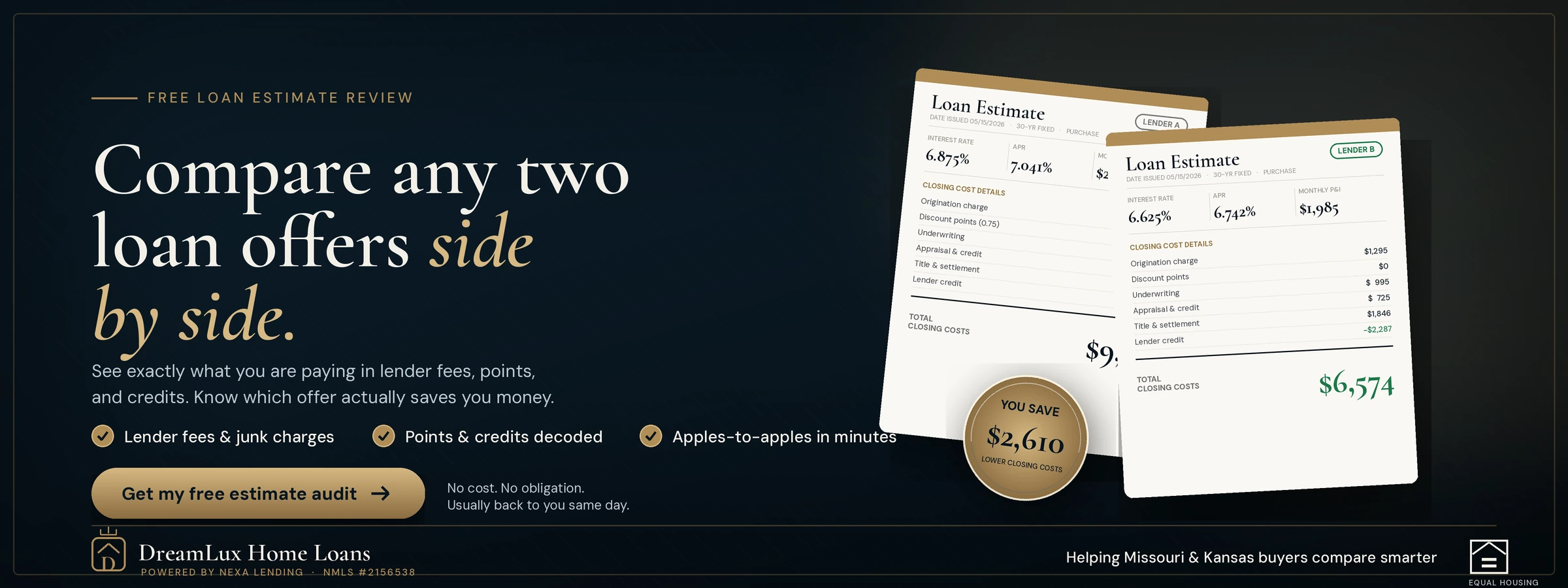



















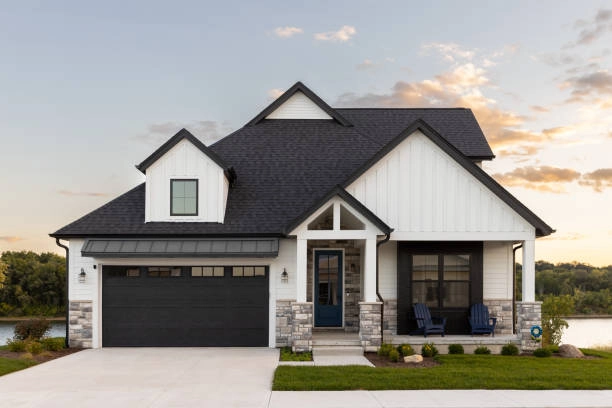














 Zach Brown | NMLS #2156538 | DreamLux Home Loans, a DBA of NEXA Lending, LLC | NMLS #1660690 | Equal Housing Lender | Licensed in Missouri & Kansas